
Buying Gold Bars from Banks: Secure Investment Guide 2025
As of September 2025, gold prices have surged past $3,800 per ounce, driven by ongoing inflation, rising geopolitical tensions, and central bank gold accumulation worldwide.
For investors seeking stability and long-term value, gold is once again proving to be the ultimate safe haven.
But with so many buying options available—online dealers, ETFs, private brokers—how do you safely and confidently buy gold bars without risk of fraud, overpaying, or receiving low-quality bullion?
One of the most secure, transparent ways to purchase physical gold today is through a regulated bank. Whether you’re a first-time buyer or an experienced investor, buying gold bars from a bank offers the advantage of certified purity, institutional trust, and clear documentation—without the uncertainties of dealing with unverified sellers.
Why Banks?
Banks offer a regulated environment, strict KYC (Know Your Customer) procedures, and the ability to verify every ounce of gold you purchase.
While premiums may be slightly higher than online platforms, the security, convenience, and legitimacy of the transaction often outweigh the cost—especially in large or long-term gold investment strategies.
In this complete guide to gold investment in 2025, you’ll learn:
-
Why gold bars remain a strong hedge in today’s economic climate
-
How to buy gold bars from a bank—step by step
-
What to expect in terms of costs, taxes, and premiums
-
The best banks to consider in the U.S., Africa, and globally
-
How to securely store, insure, and resell your gold
Whether you’re building a personal hedge against inflation or creating generational wealth, this guide will help you buy gold bars from a bank with confidence, clarity, and smart decision-making.
Why Buy Gold Bars from Banks?
If you’re considering investing in physical gold in 2025, one of the most important questions you’ll face is:
“Is it safe to buy gold from a bank?”
The short answer is yes—banks remain one of the safest and most regulated channels for acquiring gold bars, especially for first-time investors or those making large purchases.
Security & Regulation
When you buy gold bars from a bank, you’re operating in a heavily regulated environment. Banks follow strict anti-money laundering (AML) and Know Your Customer (KYC) procedures, ensuring every transaction is documented and traceable.
This minimizes the risk of fraud, counterfeit bars, or shady sourcing—common pitfalls when dealing with less reputable sellers.
You’ll typically receive instant documentation, including:
-
A purchase receipt linked to your verified identity
-
The gold bar’s certificate of authenticity (with serial number)
-
In some cases, proof of refinery accreditation (e.g., LBMA-approved)
These documents not only prove the legitimacy of your purchase but also make future resale—whether back to the bank or a dealer—far easier.
Gold Bank vs Dealers: What’s the Difference?
| Bank | Online Dealer / Pawnshop |
|---|---|
| High trust, regulated | Varies by seller reputation |
| In-person service | Remote/international shipping required |
| Slightly higher premiums (1–3%) | Lower cost, but higher risk |
| Instant documentation | May require extra verification |
While online dealers like APMEX , Gold Buyers Africa and JM Bullion offer more variety and slightly lower premiums, they often involve shipping risks, storage uncertainty, and limited personal support.
Pawnshops, on the other hand, are not recommended for gold bars due to inconsistent pricing, lack of certification, and potential for scams.
Bottom Line
If you’re looking for peace of mind, clear documentation, and asset protection, buying gold bars from a bank is one of the most secure and reliable ways to invest in gold—especially in today’s volatile market.
2025 Gold Market Outlook: Timing Your Purchase
The gold price in 2025 has already broken records, surging past $3,000 per ounce earlier this year and reaching $3,800+ by September.
While some may wonder if the rally has peaked, many analysts believe the upward trend is far from over.
Why? Because the fundamentals remain exceptionally strong.
Central Banks Are Buying—Aggressively
One of the most significant gold investment trends of 2025 is the continued accumulation of gold by central banks.
Countries like China, India, Russia, and Turkey have been diversifying away from the U.S. dollar and increasing their gold reserves to hedge against geopolitical instability and de-dollarization risks.
This unprecedented demand from sovereign institutions puts strong upward pressure on prices—and shows no sign of slowing down.
Dollar Weakness Boosts Bullion
As inflation continues to challenge global economies and the U.S. dollar weakens against other currencies, gold becomes even more attractive.
Investors turn to it not just for long-term value, but for short-term capital preservation in a time of rising costs and market volatility.
📈 Is $4,000 Gold Coming?
Many financial analysts and investment banks now forecast gold could cross $4,000/oz by year-end 2025, especially if inflation persists and global tensions escalate.
With tightening supply and growing demand, physical gold—particularly gold bars—remains one of the most resilient asset classes.
Bottom line: If you’re considering buying gold, the time to act may be now. The 2025 gold price trajectory favors early buyers, especially those who prioritize security through bank-issued gold bars.

Step-by-Step: Buying Gold Bars from a Bank
When it comes to securing your wealth in physical gold, banks offer one of the safest and most structured avenues available.
Understanding the exact process to buy gold bar products from a bank ensures you avoid costly mistakes, overpaying, or receiving improperly documented bullion.
Below is a detailed, step-by-step breakdown of how to buy gold from a bank in 2025.
1. Define Your Investment Goals Before Walking In
Before you approach a bank, take time to clearly define your objectives. Are you investing for long-term wealth preservation, a hedge against inflation, or short-term gains?
How much capital are you willing to invest—$5,000, $20,000, or more? Are you looking to buy in small denominations like 1 oz bars for liquidity, or larger ones like 1 kg bars for better value per gram?
These factors will help determine the right product and bank for your needs. Without clear goals, you risk buying the wrong size or paying unnecessary premiums.
2. Research the Live Spot Price of Gold
The market value of gold changes by the minute. To avoid overpaying, check a reputable gold spot price tracker such as Kitco, Bloomberg, or GoldPrice.org.
Banks typically add a 1–3% premium over the live spot rate, so having the current price in mind allows you to compare the offer fairly.
This step is especially important if you’re buying a larger quantity, where small percentage differences could translate into hundreds or thousands of dollars in savings or loss.
3. Call the Bank Ahead to Confirm Availability and Terms
Most banks that offer gold bars do not keep large inventories on-site. Call your local branch or the bank’s bullion services department in advance and ask whether they sell to retail customers.
Ask which bar sizes and brands are available, their current premium over spot, and whether the bars are LBMA-certified.
Additionally, inquire about accepted payment methods, KYC requirements, and whether appointments are necessary. This preparation helps prevent wasted trips and streamlines the entire buying process.
4. Verify Your Identity for KYC Compliance
When you arrive at the bank to make your purchase, be prepared to present valid identification. Most banks require a government-issued ID (such as a passport or national ID card), and sometimes proof of address or a tax identification number.
This step complies with mandatory Know Your Customer (KYC) and anti-money laundering (AML) regulations, especially for transactions exceeding $10,000. The bank may also document your purchase for future tax reporting, especially in jurisdictions where gold sales are monitored or taxed.
5. Select the Gold Bar That Matches Your Strategy
You’ll be offered options such as 1 oz, 100g, 250g, or 1 kg bars—often from trusted mints like PAMP Suisse, Valcambi, Argor-Heraeus, or the Perth Mint.
Always ask to see the assay certificate, check the serial number, and ensure the packaging is sealed and untampered.
Bars with proper certification and traceable serials are not only safer to own but much easier to resell at full value. Larger bars offer better pricing per gram, but smaller bars offer greater liquidity.
6. Make Payment and Collect Your Receipt
Banks typically accept wire transfers, direct account debits, or—in limited cases—cash for gold purchases.
Once payment is processed, ensure you receive a detailed receipt that includes the gold bar’s weight, brand, serial number, the transaction’s date and time, the spot price used, the premium applied, and the total amount paid. This documentation is essential for insurance, resale, or future tax reporting.
7. Ask Questions Before Leaving the Branch
Don’t hesitate to ask the bank representative if they offer secure storage options such as a safe deposit box. Some banks even offer free or discounted storage for a limited time as part of the sale.
You should also ask about buyback policies—many banks will repurchase gold bars they’ve sold at the current spot price minus a small spread (usually 1–2%). Knowing this upfront will save time when you’re ready to sell.
Sample Conversation with a Bank Representative
Customer: “Good morning, I’m interested in buying a 100g PAMP Suisse gold bar. I checked the spot price this morning—can you confirm today’s premium and availability?”
Bank Representative: “Certainly. The spot price is currently $3,825/oz. We apply a 2.5% premium, and we have 100g PAMP Suisse bars in stock. You’ll need to provide ID, and we can accept payment via wire transfer.”
Customer: “Great. Can I review the bar’s certificate and serial number before completing the transaction?”
Bank Representative: “Of course. The bar is sealed with full documentation.”
By following this structured process, you’ll be well-prepared to make a smart, secure gold investment through a reputable financial institution.
Banks may charge slightly more than online dealers, but for many investors, the peace of mind is well worth the premium.
Bank vs Online Dealers vs ETFs: What’s Best for You?
Choosing the right method to invest in gold in 2025 depends on your goals, risk tolerance, and how hands-on you want to be with your investment.
While all three methods—banks, online dealers, and ETFs—give you access to gold exposure, they each come with distinct advantages and trade-offs.
So, how do you know which option is right for you? Let’s break it down.
Comparison Table: Gold Buying Methods
| Method | Trust | Cost/Premium | Liquidity | Access |
|---|---|---|---|---|
| Banks | Very high (regulated) | 1–3% over spot | Moderate (sell to bank) | In-person only, limited locations |
| Online Dealers | Varies by seller reputation | 0.5–2% over spot | High (sell to dealers) | Global access, more variety |
| ETFs (e.g., GLD) | High (regulated markets) | Low (expense ratio ~0.4%) | Very high (instant trading) | Online broker platforms |
When to Choose Banks
Banks are ideal for first-time investors, those making large purchases, or anyone who values security and in-person verification over convenience. The trust factor is unmatched—your gold is certified, documented, and purchased through a regulated institution.
While banks may charge slightly higher premiums and offer fewer bar options, they provide peace of mind and simplicity in a world filled with counterfeits and scams.
When to Choose Online Dealers
Online platforms like APMEX, Gold Buyers Africa, Gold Prices In Africa, JM Bullion, or Kitco appeal to experienced investors looking for lower premiums and a wider selection of bar sizes, coins, and brands.
They’re suitable if you’re comfortable handling logistics like insured shipping and home storage. However, you’ll need to vet the dealer’s reputation carefully—fraud and counterfeit risks are real.
When to Choose ETFs
Gold-backed ETFs like GLD or IAU are perfect for passive investors who want gold exposure without physically handling or storing metal. They’re also great for quick entry and exit via online brokerages.
The trade-off? You don’t own the actual metal—you hold paper claims backed by gold reserves. For some investors, this lack of tangibility is a dealbreaker.
Conclusion: What’s the Best Way to Buy Gold in 2025?
If your priority is security and physical ownership, buying gold bars from a bank is the best way to buy gold in 2025—especially for long-term wealth preservation.
For flexibility and variety, online dealers shine. For speed and simplicity, ETFs offer unmatched convenience. Align your choice with your comfort level and investment goals.
Costs, Fees, and Taxes When Buying from Banks
Understanding the full cost of purchasing gold bars from a bank is essential to avoid surprises and maximize returns.
While gold is a tangible, inflation-resistant asset, its purchase and sale come with associated fees—both upfront and on the back end.
1. Spot Price + Premium (1–3%)
Banks typically sell gold bars at the spot price—the real-time market value of gold—plus a premium.
In 2025, this premium usually ranges from 1% to 3%, depending on the bar size, brand (e.g., PAMP Suisse or Perth Mint), and the bank’s policy.
For example, if the spot price is $3,800/oz, a 2% premium means you’ll pay $3,876 per ounce.
Larger bars (e.g., 1kg) often carry lower premiums per gram, making them more cost-effective for high-volume investors.
2. Additional Fees: Assay, Delivery, and Insurance
Some banks may charge:
-
Assay fees for verification or certification (if applicable)
-
Delivery fees if you’re requesting shipment instead of in-branch pickup
-
Storage or insurance if you choose to use the bank’s safe deposit service
Always request a full breakdown before confirming your purchase.
3. Sales Tax & Capital Gains: What You Should Know
Sales tax on gold varies by jurisdiction. Many U.S. states exempt investment-grade gold (0.999+ purity) from sales tax. However, some still apply local tax rates—check your state laws carefully.
On the backend, if you sell your gold at a profit, you’ll likely owe capital gains tax, classified as a collectible in the U.S. and taxed at a maximum rate of 28% (as of the latest gold tax 2025 updates).
Where to Buy Gold Bars from Banks (Location-Based)
If you’re wondering which banks sell gold bars, the answer depends largely on your region—and your goals. In 2025, both global and regional banks are offering gold bullion to individuals as demand for safe-haven assets continues to climb.
Here’s a breakdown of where to buy gold bars from banks, whether you’re in the U.S., Africa, or looking for international privacy.
United States: Trusted Retail Banks
Many U.S. banks sell gold either directly or through affiliated dealers. These include:
-
JPMorgan Chase – Offers 1 oz and 10 oz bars through private client services
-
HSBC USA – One of the largest global gold custodians; in-branch bullion options available
-
Wells Fargo – Select branches partner with authorized dealers to provide investment-grade gold
Note: Always call ahead—availability may be limited to certain cities or clients with investment accounts.
Africa: Buy Gold in Uganda, Kenya, Nigeria
If you’re looking to buy gold in Uganda or Kenya, some of the continent’s most established banks offer in-branch gold services:
-
Standard Bank (Uganda, Kenya, South Africa) – Offers LBMA-certified bars for retail investors
-
Absa Bank (Kenya & South Africa) – Provides gold-linked accounts and physical gold sales
-
GTBank (Nigeria) – Facilitates gold investment products with physical delivery options
Gold services may vary by branch—ask for gold desk contacts in your region.
Switzerland: Privacy-Focused Gold Banking
Swiss banks like UBS and Julius Baer remain top choices for investors seeking privacy, secure vaulting, and international diversification.
While minimum purchases may be higher, Swiss banks offer access to the most secure and discreet gold storage in the world.
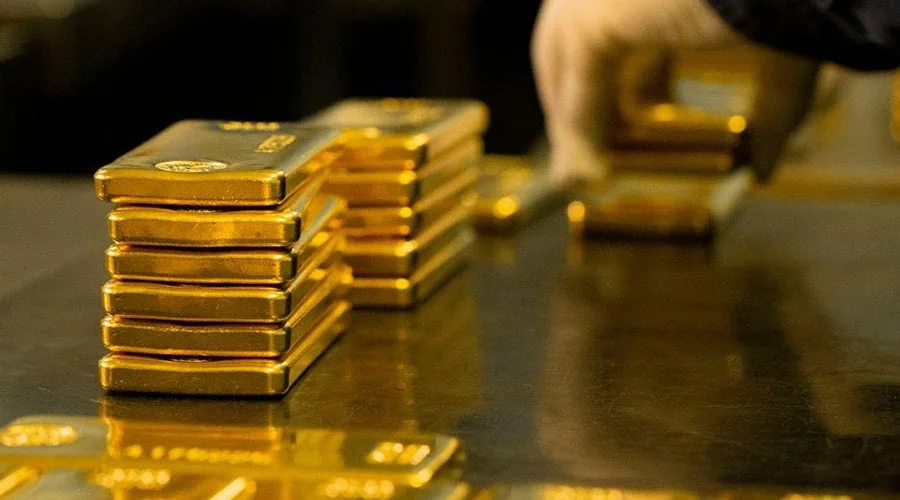
Safe Storage and Selling Your Gold Bars
Once you’ve made your investment, the next crucial step is knowing how to store gold bars safely—and how to eventually sell them without losing value or facing unnecessary risks.
Whether you’re planning to hold gold for years or flip it during a market surge, proper storage and exit planning are essential.
Where to Store: Bank Vault or Home Safe?
The safest and most popular option is a bank safe deposit box, which typically costs between $30 and $200 per year, depending on the size and location.
It offers institutional security, controlled access, and lower insurance premiums.
Alternatively, some investors prefer to keep their gold at home in a high-security fireproof safe, ideally one that’s bolted to the floor and hidden from plain sight.
While this gives you instant access, it also requires added security measures and homeowner’s insurance upgrades.
For high-net-worth individuals or large holdings, third-party private vaulting services (like Brinks or Loomis) offer international options with advanced protection and insured transit.
Insurance: Protecting Your Physical Gold
Whether stored in a bank or at home, insuring your gold bars is a must. Many insurance providers offer specialized coverage for precious metals, with rates starting at around 0.5%–1% of total value annually.
Make sure your policy covers theft, loss, natural disasters, and even political unrest in some cases.
How to Sell Gold Bars: Bank Buybacks
Most banks that sell gold bars also buy them back, often at spot price minus a 1–2% spread, provided the bars are intact, sealed, and accompanied by their original documentation.
You can also sell to certified gold dealers, though you’ll want to compare offers and verify buyer credibility.
Knowing how to store and sell your gold bars smartly ensures your investment remains secure—and profitable—long after purchase.
Common Mistakes to Avoid When Buying Gold Bars
Even seasoned investors can make costly mistakes when purchasing physical gold.
To protect your capital and avoid regrets, here are essential gold bar buying tips to keep in mind.
1. Overpaying Premiums
One of the most common errors is paying far above the spot price without realizing it. Always compare the premium on gold bars—typically 1–3% at banks and 0.5–2% at dealers.
Anything significantly higher may indicate poor timing, a lack of research, or hidden fees.
2. Failing to Collect Documentation
Never walk away without proper documentation. Ask for an itemized receipt, assay certificate, and proof of the bar’s serial number.
These are essential for resale, tax reporting, and insurance. Missing paperwork can reduce your gold’s resale value—or worse, cast doubt on its authenticity.
3. Storing at Home Without Insurance
Stashing gold in your closet or drawer might feel convenient, but it’s a major risk. Without a high-security safe and dedicated insurance, you expose yourself to theft, fire, and loss.
A bank deposit box or insured third-party vault is often a better option.
Avoiding these simple but critical errors will help you avoid gold scams and protect your physical assets for the long term. A little due diligence goes a long way when it comes to precious metals.
Frequently Asked Questions
Q1: What banks sell gold bars?
A1: Major U.S. banks like JPMorgan Chase, Wells Fargo, and HSBC sell gold bars, along with African banks such as Standard Bank, Absa, and GTBank. Availability varies by location and branch.
Q2: How much does a 1 oz gold bar cost at banks?
A2: The price depends on the current spot price plus a premium of 1–3%. For example, if gold is $3,800/oz, expect to pay between $3,838 and $3,914 per ounce.
Q3: Is buying gold bars from banks taxed?
A3: Sales tax depends on your state or country. Many U.S. states exempt investment-grade gold from sales tax. Capital gains tax applies on profits when you sell, at rates up to 28%.
Q4: Can I sell gold bars back to the bank?
A4: Many banks offer buyback programs, usually at spot price minus a small spread. It’s best to confirm terms with your bank before purchase.
Conclusion: Start Your Secure Gold Investment Today
Investing in gold bars through reputable banks remains one of the safest and most reliable ways to build wealth in 2025. With gold prices surging past $3,800 per ounce amid inflation and geopolitical uncertainty, now is an opportune time to secure tangible assets that have historically preserved value through market volatility.
Banks provide unmatched trust, regulated transactions, and convenient processes—allowing you to buy gold confidently with immediate documentation and genuine products.
Following the step-by-step approach outlined above ensures you avoid common pitfalls like overpaying premiums or losing critical paperwork.
Market experts forecast gold could reach $4,000 per ounce by year-end, potentially amplifying your investment’s value. Don’t miss out on this opportunity to diversify your portfolio and protect your wealth.
Ready to start your gold journey? Contact us today, or WhatsApp us, Secure your future with gold, the timeless safe haven.