Top 10 Gold Mining Companies in Ghana (2025 Update)
Ghana remains one of Africa’s leading gold producers, home to some of the continents largest and most reputable gold mining companies. In this 2025 guide, we highlight the top 10 gold mining companies in Ghana, showcasing their production volumes, mining locations, ownership structures, and investment potential. As the gold mining industry in Ghana continues to expand, both local and international firms play a critical role in shaping the country’s economy and global gold exports.
From major operations like Newmont Ghana, Gold Fields, and AngloGold Ashanti to fast-growing players such as Asante Gold and Perseus Mining, these companies are driving gold production and creating thousands of jobs across the country. Whether you’re a gold investor, job seeker, or industry analyst, understanding who leads Ghana’s mining sector gives you valuable insight into opportunities within West Africa’s gold mining hub.
Read on to explore the key players in Ghana’s gold industry and how they contribute to the nation’s status as a top gold exporter.
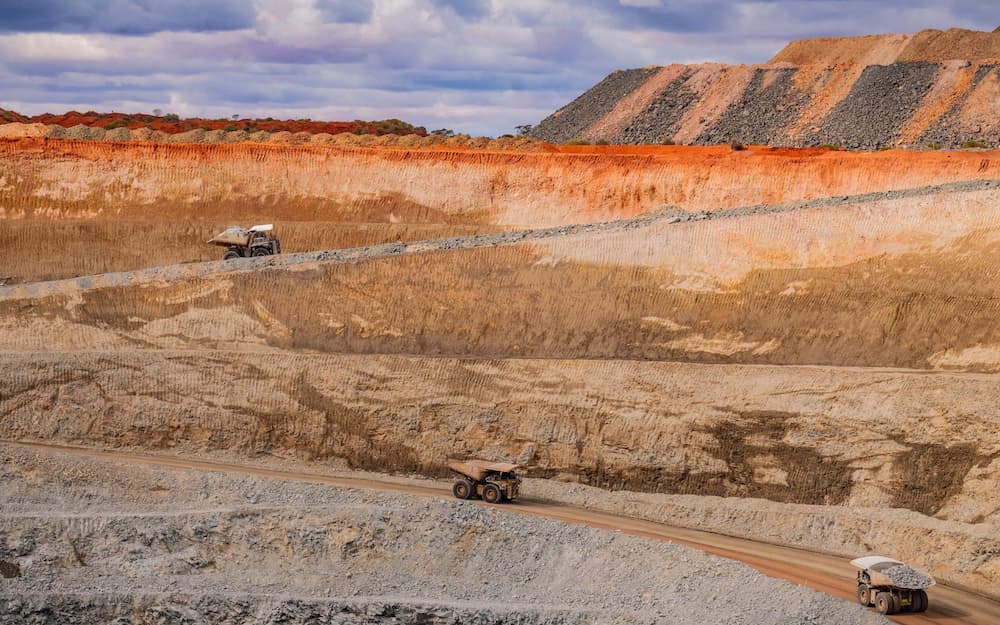
Top 10 Mining Companies in Ghana
- Newmont Ghana Gold Ltd
- Flagship Mine: Ahafo and Akyem Mines
- Parent Company: Newmont Corporation (USA)
- Operations: Large-scale open-pit mining
- Significance: Newmont is the largest gold producer in Ghana, with state-of-the-art sustainability practices and community engagement programs.
Newmont’s Ahafo and Akyem mines are among the most productive in West Africa, combining high-grade reserves with responsible mining standards.
- Gold Fields Ghana Ltd
- Flagship Mine: Tarkwa and Damang Mines
- Parent Company: Gold Fields Limited (South Africa)
- Operations: Open-pit mining and heap leach technology
- Significance: A major contributor to Ghana’s gold exports and employment.
Gold Fields Ghana is committed to long-term investment in the region and has established significant social development projects in the Western Region.
- AngloGold Ashanti (Ghana) Ltd
- Flagship Mine: Obuasi Gold Mine
- Parent Company: AngloGold Ashanti Limited (South Africa)
- Operations: Underground mining
- Significance: Operates one of Ghana’s oldest and most iconic mines.
After a temporary closure, the Obuasi Mine was modernized and reopened in 2019, now operating as a high-tech underground gold mine with international safety standards.
- Asanko Gold Ghana Ltd
- Flagship Mine: Asanko Gold Mine (in partnership with Gold Fields)
- Parent Company: Galiano Gold (Canada)
- Operations: Open-pit mining
- Significance: Known for consistent output and strong financial performance.
Asanko is an example of successful Canadian-African mining partnerships, leveraging joint ventures for operational efficiency and scalability.
- Chirano Gold Mines Ltd
- Flagship Mine: Chirano Gold Mine (Western North Region)
- Parent Company: Asante Gold Corporation (Canada) [acquired from Kinross in 2022]
- Operations: Underground and open-pit mining
- Significance: A key regional employer with robust exploration upside.
Asante Gold’s acquisition of Chirano has strengthened its footprint in Ghana and increased its production portfolio.
- Perseus Mining (Ghana) Ltd
- Flagship Mine: Edikan Gold Mine
- Parent Company: Perseus Mining Limited (Australia)
- Operations: Open-pit mining
- Significance: A solid mid-tier gold producer with regional growth plans.
Perseus has earned a reputation for efficient project development and is expanding into Côte d’Ivoire alongside its Ghanaian operations.
- Cardinal Namdini Mining Ltd
- Flagship Project: Namdini Gold Project (Northern Ghana)
- Parent Company: Shandong Gold Mining (China)
- Operations: Large-scale development project
- Significance: One of Ghana’s largest undeveloped gold resources.
With feasibility studies completed, the Namdini project is expected to bring new production to northern Ghana, opening opportunities in underexplored regions.
- Adamus Resources Ltd
- Flagship Mine: Nzema Gold Mine (Western Region)
- Parent Company: Nguvu Mining (recent acquirer)
- Operations: Open-pit mining
- Significance: Previously operated by Endeavour Mining; strategically located near the coast for efficient logistics.
Adamus has potential for expansion through adjacent license areas and infrastructure upgrades.
- Xtra-Gold Resources Corp.
- Flagship Project: Kibi Gold Belt
- Parent Company: Xtra-Gold Resources Corp. (Canada)
- Operations: Exploration-stage
- Significance: Focused on discovering and developing new gold resources in Ghana’s Eastern Region.
Xtra-Gold is targeting junior mining success through aggressive exploration in highly prospective areas.
- BCM International Ltd
- Business Model: Mining contractor and mine owner
- Operations: Ghana and other West African countries
- Significance: One of Africa’s largest contract mining and civil earthworks companies.
BCM operates both as a contractor for large firms and as an independent mine developer, giving it a unique hybrid position in the industry.
Steps to consider when choosing a gold mining company in Ghana
- Verify the Company’s Licensing & Registration
Why it matters: Gold trading and mining in Ghana are heavily regulated. Working with an unlicensed entity can lead to legal complications or fraud.
- Check with the Minerals Commission of Ghana to ensure the company is:
- Legally registered
- Holds a valid mining lease or gold export license
- Ask for their GRA (Ghana Revenue Authority) and GIPC (Ghana Investment Promotion Centre) registrations.
NOTE. Use the Minerals Commission’s online portal or visit their office to verify.
- Assess the Company’s Reputation & Track Record
Why it matters: A well-established gold company will have a strong record of safe operations, on-time deliveries, and regulatory compliance.
- Search for reviews and testimonials
- Look at how long they’ve been in operation
- Check for legal disputes, export violations, or community issues
- Review recent partnerships or deals with international buyers
Note: Reputable companies often have relationships with LBMA-accredited refineries and global logistics providers.
- Evaluate Operational Transparency
Why it matters: Trust and security are critical when dealing with precious metals.
Ask:
- Is the company willing to show their mine site, refinery, or export facility?
- Do they provide assay reports, gold bar serial numbers, and export certificates?
- Can they explain their sourcing (e.g., from large-scale vs. small-scale producers)?
Avoid any firm that resists providing documentation or insists on cash-only deals.
- Review Their Pricing, Terms, and Payment Security
Why it matters: Pricing structures should be clear and reflect international gold benchmarks (e.g., LBMA spot prices).
- Are they offering realistic prices, or does it sound “too good to be true”?
- Do they use secure escrow, LC (Letter of Credit), or bank-to-bank transfers?
- Are there any hidden charges (shipping, assay, taxes)?
Only deal with firms that offer written contracts and secure payment structures.
- Confirm Export Capability and Compliance
Why it matters: Only licensed exporters can ship gold from Ghana legally.
- Do they have an export license from the Minerals Commission?
- Can they show past exports, airway bills, or customs clearance documents?
- Are they linked to an authorized refinery like Asap Vasa or Gold Coast Refinery?
A compliant company should easily prove how it ships gold to clients legally and safely.
NOTE. Visit or Appoint a Local Agent
If you’re a foreign investor or buyer, consider:
- Visiting Ghana to inspect the operation in person
- Working with a licensed local consultant, lawyer, or gold agent who knows the regulations
Gold Mining in Ghana: History, Laws & Economic Impact
How Ghana Became Africa’s Gold Powerhouse – and What You Need to Know About Its Mining Laws
A Rich Legacy: The History of Gold Mining in Ghana
Ghana, formerly known as the Gold Coast, has a gold mining legacy that stretches back over 1,000 years. Indigenous communities in ancient Ghana were extracting gold from riverbeds and surface deposits well before European colonization. By the 15th century, Ghana’s gold wealth attracted Portuguese traders, and later, the British established colonial control under the name “Gold Coast,” a direct reference to the region’s prolific mineral wealth.
In 1957, Ghana became the first African nation to gain independence. Since then, the country has continued to develop a modern mining industry, with both large-scale mining companies and artisanal and small-scale miners (ASMs) contributing significantly to national output.
Today, Ghana is:
- Africa’s gold producer
- Gold producer globally (as of 2024)
- A hub for both exploration and full-scale production
Ghana Mining Laws: Legal Framework for the Gold Industry
The Minerals and Mining Act, 2006 (Act 703)
This is the primary legislation governing mining in Ghana. It outlines licensing, royalties, local participation, and environmental responsibilities.
Key Highlights:
- Licensing & Permits: Both Ghanaian nationals and foreigners can obtain mining licenses, but small-scale licenses are reserved for Ghanaians.
- Royalty Payments: All mining leaseholders must pay a royalty of 5% of gross revenue to the government.
- Local Content: Foreign companies must partner with local businesses and prioritize Ghanaian employment.
- Land Use: Companies must consult local communities before operations and compensate landowners.
- Environmental Regulation: Mining firms must submit Environmental Impact Assessments (EIAs) and reclamation plans.
Regulatory Bodies:
- Minerals Commission. Oversees licensing, policy, and sector development.
- Environmental Protection Agency (EPA). Always ensure mining meets environmental standards.
- Ghana Geological Survey Authority (GGSA). Provides geological data to support exploration.
Gold Mining’s Contribution to Ghana’s Economy
Mining is a pillar of Ghana’s economy, with gold alone accounting for the bulk of export revenues.
Key Economic Contributions (2023–2024):
- $6.6 billion in gold export revenue (2023)
- Mining contributed 8.3% to Ghana’s GDP
- Over 34% of total export earnings came from gold
- 300,000+ direct and indirect jobs, with strong local participation in small-scale mining
Community and Infrastructure Development
Many mining companies, especially the top-tier firms, invest in:
- Road and school construction
- Water and sanitation projects
- Skills training and job creation programs
Major Gold Mining Companies Operating in Ghana
Ghana’s mining success is driven by both international companies and strong local participation. Here are some of the top gold mining companies in Ghana:
| Company | Key Mines | Ownership |
| Newmont Ghana | Ahafo, Akyem | USA-based (Newmont Corp.) |
| Gold Fields Ghana | Tarkwa, Damang | South Africa |
| AngloGold Ashanti Ghana | Obuasi | South Africa |
| Asanko Gold | Asanko Mine | JV: Canada & South Africa |
| Chirano Gold Mines | Chirano | Canada (Asante Gold) |
| Perseus Mining Ghana | Edikan | Australia |
| Cardinal Namdini | Namdini Project | China (Shandong Gold) |
Challenges in the Sector
Despite its growth, Ghana’s mining sector faces challenges:
- Illegal (galamsey) mining: Environmental degradation and revenue loss
- Land disputes with local communities
- Fluctuating gold prices are affecting royalties and investment
- Smuggling of gold to neighboring countries and a lack of traceability
The government has taken steps to address these, including:
- Deployment of military task forces to combat illegal mining
- Establishment of a gold traceability system
- Support for legal artisanal miners through cooperatives and equipment leasing
Ghana’s Global Role in Gold Trade
Ghana exports gold primarily to:
- United Arab Emirates (UAE)
- Switzerland
- India
- South Africa
The country is now investing in local refining capacity, with facilities like:
- Gold Coast Refinery
- Asap Vasa Refinery
- Sahara Royal Gold Refinery
These aim to increase in-country value addition and reduce the export of raw gold.
How to Invest in Gold Mining in Ghana (2025 Guide)
Explore the Best Investment Opportunities, Mining Companies, and Legal Landscape for Gold Investors in West Africa’s Gold Powerhouse
Why Invest in Gold Mining in Ghana?
Ghana is Africa’s largest gold producer and one of the most investor-friendly mining jurisdictions on the continent. With a robust legal framework, active capital markets, and decades of gold production, Ghana offers low-risk, high-reward opportunities for both local and international investors.
In 2024, Ghana produced over 4.1 million ounces of gold, contributing over $6 billion to the national economy.
Legal & Regulatory Framework for Gold Mining Investment in Ghana
Minerals and Mining Act, 2006 (Act 703) – Core Legal Reference
This act governs all mining activities and provides clear pathways for investment in exploration, production, and processing.
Key Provisions for Investors:
- 100% foreign ownership permitted for large-scale mining companies
- Ghanaian-only licensing for small-scale mining
- Mining leases available for up to 30 years (renewable)
- Mandatory local content in procurement, employment, and subcontracting
- 5% royalty on gross revenue
- Corporate tax: 35% standard for mining firms
Licensing Bodies:
- Minerals Commission. Grants licenses, monitors compliance
- Ghana Investment Promotion Centre (GIPC). Facilitates FDI
- Environmental Protection Agency (EPA). Approves environmental permits
Ways to Invest in Ghana’s Gold Sector
- 1. Direct Equity in Mining Companies
Invest directly in companies with operations in Ghana, either privately or through stock exchanges.
- Publicly Traded Mining Stocks (Ghana-Focused)
Some of the top gold mining companies with Ghana operations are listed on:
- Toronto Stock Exchange (TSX)
- New York Stock Exchange (NYSE)
- Australian Securities Exchange (ASX)
- Ghana Stock Exchange (GSE) – limited listings
Top Public Mining Companies to Invest In (2025)
| Company | Exchange | Ghana Asset | Market Cap (USD) |
| Newmont Corp | NYSE | Ahafo & Akyem | $35B |
| Gold Fields Ltd | JSE/NYSE | Tarkwa & Damang | $12B |
| AngloGold Ashanti | JSE/NYSE | Obuasi | $8B |
| Perseus Mining | ASX | Edikan | $1.6B |
| Asante Gold | CSE | Chirano, Bibiani | $250M |
| Shandong Gold / Cardinal Namdini | SSE | Namdini Project | $20B (parent) |
Note: Check with your broker or investment advisor for risk and suitability.
Private Investment & Joint Ventures
For those looking to invest directly into exploration, processing plants, or small-scale mining, Ghana offers:
- Joint venture options with local operators
- Partnership schemes through the GIPC and the Minerals Commission
- Industrial parks like the Integrated Iron & Steel Development Corporation
You can also invest in:
- Gold buying and export businesses
- Refining and smelting operations
- Mining services and equipment supply
Investment Risks to Consider
Like any resource-based investment, Ghana’s mining sector has its share of risks. Here’s what to keep in mind:
| Risk | Mitigation |
| Gold price volatility | Hedge with futures/options or diversify geographically |
| Political or regulatory shifts | Ghana has strong legal continuity, but it always monitors policy |
| Illegal mining (galamsey) | Focus on regulated zones and partner with licensed operators |
| Land disputes & community unrest | Prioritize ESG and stakeholder engagement |
Ghana remains one of the most stable mining environments in Africa, with strong institutional oversight and clear dispute resolution channels.
Taxation & Repatriation of Profits
Ghana allows full repatriation of:
- Capital
- Profits
- Dividends
- Royalties
Standard corporate taxes for mining companies:
- 35% corporate income tax
- 5% royalty on gross gold sales
- Withholding taxes on foreign remittances (typically 8%–15%)
Tax incentives are available for:
- Greenfield exploration projects
- Investments in value-added processing (e.g., gold refining)
- Export-oriented businesses registered with the GIPC
Local Refining & Value Addition
Ghana is increasing local gold value addition with licensed refineries such as:
- Asap Vasa Refinery
- Gold Coast Refinery
- Sahara Royal Gold Refinery
These open up further investment options in:
- Refining joint ventures
- Bullion trade
- Export licensing services
Jobs in the Ghana Mining Sector: Top Employers & Salaries
Explore Career Opportunities, Salary Expectations, and How to Apply in Ghana’s Thriving Gold Mining Industry
Why Work in Ghana’s Mining Sector?
Ghana’s mining industry is a pillar of the national economy and a major source of employment, offering well-paying jobs across engineering, geology, metallurgy, safety, logistics, and finance. With over 300,000 direct and indirect jobs tied to the sector, mining in Ghana is a top career destination for both graduates and skilled professionals.
Top Mining Companies Hiring in Ghana (2025)
The following companies lead in employment and training opportunities:
| Company | Major Sites |
| Newmont Ghana | Ahafo, Akyem |
| Gold Fields Ghana | Tarkwa, Damang |
| AngloGold Ashanti Ghana | Obuasi |
| Asante Gold | Chirano, Bibiani |
| Perseus Mining Ghana | Edikan |
| Cardinal Namdini | Namdini Project |
| Adamus Resources (Nzema) | Nzema |
| Golden Star Resources | Wassa |
| Ghana Manganese Company | Nsuta |
| Rocksure International | Multiple sites |
Types of Mining Jobs in Ghana
| Category | Roles |
| Engineering & Technical | Mine Engineers, Mechanical Engineers, Plant Supervisors |
| Geology & Surveying | Exploration Geologists, GIS Analysts, Core Samplers |
| Safety & Environment | HSE Officers, Environmental Scientists, Reclamation Officers |
| Operations & Logistics | Blasting Supervisors, Equipment Operators, Supply Chain Managers |
| Finance & Admin | Accountants, HR Officers, Procurement Officers |
| Skilled Trades | Electricians, Welders, Mechanics, Drivers |
Many companies also offer:
- Graduate trainee programs
- Internships for university students
- Scholarships and local apprenticeship programs
Mining Salaries in Ghana (2025 Estimates)
| Job Role | Monthly Salary (GHS) | Notes |
| Mine Engineer | 12,000 – 25,000 | Depending on experience & site |
| Geologist | 10,000 – 18,000 | Higher for exploration roles
|
| Safety Officer | 7,000 – 15,000 | With bonuses for remote assignments |
| Plant Operator | 5,000 – 10,000 | Includes allowances |
| Electrician/Mechanic | 4,000 – 8,500 | Tradespeople in high demand |
| Administrative Officer | 4,500 – 7,000 | Often includes housing/transport benefits |
Senior expatriates or global hires can earn USD-equivalent salaries, often $60,000–$120,000+ annually with housing and travel packages.
Skills in Demand in Ghana’s Mining Sector
To qualify for top roles, applicants typically need: top 10 gold mining companies in Ghana
Education & Certification:
- Degree in Mining Engineering, Geology, Metallurgy, Environmental Science, or Safety
- NVTI or City & Guilds for technical trades
- Valid blasting, driving, or welding certifications (where applicable)
- HSE/ISO training for environmental and safety positions
Top Skills:
- AutoCAD & mine planning software (e.g., Surpac, Datamine)
- Heavy equipment maintenance (CAT, Komatsu, Sandvik)
- GIS and data modeling for exploration
- Health & safety compliance (MSHA, OSHA, ISO 14001)
- Project management and contract execution
How to Apply for Mining Jobs in Ghana
Steps to Follow:
- Visit company job portals listed above
- Create a strong CV focused on technical or safety competencies
- Tailor your cover letter to the mine site and position
- Submit applications through official sites (avoid third-party agencies unless verified)
- Consider creating a profile on:
- Jobberman Ghana
- Ghana HR Solutions
- LinkedIn Jobs Ghana
Tip: Many mining companies prioritize applicants from mining regions such as Ashanti, Western, and Ahafo. Use your location and familiarity with local communities to your advantage.
Working Conditions & Benefits
Ghanaian mining firms often provide:
- On-site accommodation or travel allowances
- Free meals during shifts
- Medical insurance
- Pension plans
- Training & development programs
Some roles operate on rotational shifts (e.g., 14 days on / 7 days off) in remote locations.
Ghana’s Gold Export Market: Buyers, Refineries, and Routes
Understanding How Ghana Adds Value and Delivers Its “Yellow Metal” to Global Markets
Key Gold Refineries in Ghana
Ghana has invested in domestic refining capacity to capture more value before export. The major licensed refineries are: top 10 gold mining companies in Ghana
| Refinery Name | Location | Capacity | Notes |
| Asap Vasa Co. Ltd | Tema | 5 tons/day | Established 2015; LBMA-accredited assay lab |
| Gold Coast Refinery Ltd | Accra–East Legon | 3 tons/day | |
| Sahara Royal Gold Refinery Ltd | Accra–Airport | 2 tons/day | 2 tons/day Focuses on small-scale miner aggregates
|
Leveraging these facilities helps Ghana shift from exporting raw dore to higher‐value refined bars, boosting domestic processing and job creation.
Export Statistics & Top Trade Partners
In 2023, Ghana exported 3,094 tonnes of semi-manufactured gold valued at $7.63 billion. The four main destinations together accounted for 99.2% of exports:
| Destination | Export Value (USD ’000) | Share of Total Exports |
| Switzerland | 3,075,132.52 | 40.3% |
| United Arab Emirates | 1,667,459.10 | 21.8% |
| South Africa | 1,664,744.56 | 21.8% |
| India | 950,172.98 | 12.5% |
Together: $7.36 billion (99.2% of gold exports)
In Q3 2024, the UAE alone received 40.1%, Switzerland 30.1%, South Africa 22.2%, and India 6.8% of Ghana’s gold exports. top 10 gold mining companies in Ghana
Export Regulations & Licensing
Exporting gold from Ghana requires strict compliance under the Minerals and Mining Act, 2006 (Act 703) and related regulations:
- Registration & Licensing
- All exporters must register with the Minerals Commission and obtain an Export License.
- Small-scale miners export only through designated primary dealers.
- Assaying & Permits
- Gold must be assayed at an LBMA-accredited facility (e.g., Asap Vasa assay lab).
- A Certificate of Assay is submitted with the export application.
- Customs Clearance
- Exporters present the Assay Certificate to the Ghana Revenue Authority (GRA) for duty and tax assessment.
- The Bank of Ghana issues a Gold Export Permit to ensure foreign exchange repatriation.
- Traceability & AML
- Recent reforms mandate a gold traceability system, capturing origin data to combat smuggling.
- Exports must comply with anti-money-laundering (AML) and know-your-customer (KYC) requirements.
Main Export Routes
- Air Freight:
- Kotoka International Airport (Accra) handles most refined‐bar shipments under secure vault operations.
- Sea Freight (limited):
- Bulk dore bars may transit via Takoradi Port, though this is less common due to security considerations.
Secure transport corridors pass through police and military escorts, especially for artisanal gold aggregated in regional collection centers.
Companies with Direct Export Access
The following licensed entities both mine and export gold directly:
- Newmont Ghana Gold Ltd (Ahafo, Akyem)
- Gold Fields Ghana Ltd (Tarkwa, Damang)
- AngloGold Ashanti Ghana Ltd (Obuasi)
- Perseus Mining Ghana Ltd (Edikan)
- Asante Gold Corporation (Chirano, Bibiani)
These firms leverage their in-house refineries and assay labs to streamline export workflows and maximize margins.
Conclusion
Ghana’s gold mining industry remains one of the most dynamic and profitable sectors in Africa, driven by the strength of the top 10 gold mining companies in Ghana. From globally recognized leaders like Newmont Ghana and AngloGold Ashanti to rapidly expanding firms such as Asante Gold and Cardinal Namdini, these companies are not only increasing gold production but also fueling economic growth, job creation, and foreign investment.
Whether you’re looking to invest in gold mining in Ghana, find career opportunities in the mining sector, or understand which gold mining companies are most active in 2025, this guide offers valuable insights into Ghana’s key players. As the country continues to modernize its mining laws and boost local refining and export capacity, these companies are set to remain central to Ghana’s status as a top gold exporter in West Africa.
Frequently Asked Questions (FAQs) Top 10 Gold Mining Companies in Ghana
- Who are the top 10 gold mining companies in Ghana (2025)?
The top 10 gold mining companies in Ghana include:
- Newmont Ghana Gold Ltd
- Gold Fields Ghana Ltd
- AngloGold Ashanti Ghana
- Asante Gold Corporation
- Perseus Mining Ghana Ltd
- Cardinal Namdini Mining Ltd
- Golden Star Resources
- Adamus Resources Ltd
- Chirano Gold Mines Ltd (Asante Gold)
- Rocksure International
- Which company is the largest gold producer in Ghana?
Newmont Ghana Gold Ltd is the largest gold producer, operating the Ahafo and Akyem mines with a combined annual output of over 1 million ounces.
- Where are these gold mining companies located?
Most top companies operate in gold-rich regions such as: top 10 gold mining companies in Ghana
- Ashanti Region (Obuasi)
- Western Region (Tarkwa, Prestea, Nzema)
- Bono and Ahafo Regions (Ahafo, Kenyasi)
- Upper East (Namdini Project)
- Are these companies involved in both mining and export?
Yes, major firms like Newmont, Gold Fields, and AngloGold are fully licensed to both mine and export gold directly from Ghana.
- Which companies are publicly traded?
Several are listed on international stock exchanges:
- Newmont (NYSE: NEM)
- AngloGold Ashanti (JSE/NYSE: AU)
- Gold Fields (JSE/NYSE: GFI)
- Asante Gold (CSE: ASE / FRA: 1A9)
- Perseus Mining (ASX: PRU)
- What is the most famous gold mine in Ghana?
The Obuasi Gold Mine, operated by AngloGold Ashanti, is Ghana’s most iconic and historic gold mine, dating back over 100 years.
- Which company owns the Tarkwa and Damang mines?
Gold Fields Ghana Ltd owns both the Tarkwa and Damang gold mines in the Western Region of Ghana.
- What are the top exploration-stage companies in Ghana?
- Cardinal Namdini Mining Ltd (Namdini Project, now acquired by Shandong Gold)
- Pelangio Exploration and Cassius Mining Ltd are also advancing significant gold prospects.
- 9. Are foreign investors allowed to invest in these companies?
Yes. Many of these companies are foreign-owned or publicly listed, and Ghana welcomes direct and portfolio investment under GIPC laws.
- What is the role of Rocksure International in the mining sector?
Rocksure International is a Ghanaian mining services company involved in mine development, drilling, blasting, and project execution for several top-tier companies.
- Do these companies practice responsible or sustainable mining?
Yes, most top companies adhere to international ESG standards, invest in local communities, and support environmental restoration projects.
- How many people are employed by the top mining companies?
Collectively, the top 10 gold mining companies in Ghana directly employ over 35,000 workers, with thousands more benefiting through indirect jobs and services.
- Which company recently acquired Chirano Gold Mine?
Asante Gold Corporation acquired the Chirano Gold Mine from Kinross in 2022, consolidating its presence in Ghana with both Chirano and Bibiani operations.
- What types of jobs are available at these companies?
Career opportunities include:
- Mining engineers
- Geologists
- HSE officers
- Heavy equipment operators
- Accountants & HR staff
- Electrical & mechanical, and technicians
- How can I apply for a job with a top mining Company in Ghana?
Visit each company’s official career portal or check verified Ghanaian job boards like Jobberman Ghana or LinkedIn. You must meet relevant qualifications and often pass background and medical checks. top 10 gold mining companies in Ghana