Mining Gold in Zimbabwe | Top 10 gold mines & Opportunities
Mining gold in Zimbabwe has become one of the most profitable and fast-growing sectors in Southern Africa. With an abundance of rich gold deposits, favorable mining laws, and increasing foreign investment, Zimbabwe stands out as a top destination for gold exploration and extraction. From artisanal gold mining to large-scale commercial mining operations, the country offers unmatched opportunities for both local and international investors. Key gold-rich regions like Kadoma, Mazowe, and Shamva continue to draw interest due to their high-yield reserves. Whether you’re looking to buy gold mining claims, invest in gold mines, or understand the licensing requirements for starting a gold mining business in Zimbabwe, this comprehensive guide covers everything you need to know to tap into Zimbabwe’s booming gold mining industry.
Mining gold in Zimbabwe, Zimbabwe, a landlocked nation in southern Africa, has a rich history of gold mining that spans over a millennium, shaping its economy and culture. Gold is the country’s most significant mineral export, contributing significantly to foreign exchange earnings. In 2022, Zimbabwe produced 37.3 tons of gold, a record high, with projections for 42 tons in 2023.

History of Gold Mining in Zimbabwe
mining gold in Zimbabwe dates back to approximately 320 AD, with evidence of early extraction by indigenous peoples. Ancient miners exploited outcropping auriferous quartz veins, working them down to the water table. By the 7th century, gold was a key trade commodity, with estimates suggesting a third of historical global gold production (about 700 tons) came from Zimbabwe. The Portuguese colonized parts of the country in the 17th century, trading gold with locals, and their accounts sparked European interest.
In the 19th century, explorers and hunters further fueled fascination, leading to Cecil John Rhodes’ British South Africa Company invading in 1890, lured by tales of vast gold riches akin to South Africa’s Witwatersrand. Colonial rule formalized mining, with companies like Matabele Reefs and Estate Company industrializing operations by 1904. However, many early mines were small, exploiting narrow veins with rudimentary tools. The 20th century saw fluctuations, with production peaking during stable periods and declining during economic crises, notably in 2008 (3.6 tons) due to hyperinflation. Post-2009 dollarization stabilized the sector, and by 2022, gold output reached an all-time high, driven by both large-scale and artisanal mining.
Number of Gold Mines in Zimbabwe
Zimbabwe boasts over 4,000 recorded gold deposits, with more than 90% located in ancient workings along greenstone belts. As of 2022, Africa Mining IQ tracked 24 active gold mining projects, though the total number of operational mines, including small-scale operations, is higher. The Chamber of Mines reported 268 mines in the Gwanda Greenstone Belt alone at its peak, though many are now dormant. Small-scale and artisanal mines dominate, with estimates of 500,000 to 1.5 million miners active, producing over 60% of gold delivered to Fidelity Printers and Refiners (FPR). Large-scale mines, like Freda Rebecca and Blanket, are fewer but significant. Dormant mines, relinquished due to licensing issues or economic challenges, offer potential for revival, especially with modern exploration.
Top 10 Gold Mines in Zimbabwe
Zimbabwe’s gold production is led by a mix of large-scale and medium-sized mines, primarily in greenstone belts. Below are the top 10 gold mines, each described in approximately 80 words, based on production, historical significance, and potential in 2025. Mining gold in Zimbabwe
Freda Rebecca Gold Mine: Located near Bindura, 90 km north of Harare, Freda Rebecca is Zimbabwe’s largest gold producer, owned by Kuvimba Mining House. It mines 3,000 tons of ore daily, with a JORC resource of over 1 million ounces. Operational since 1988, it produced 680.3 tons in 2021. Its rich deposits in local shear zones and modern processing facilities ensure high output, making it a cornerstone of Zimbabwe’s gold sector.
Blanket Gold Mine: Situated in the Gwanda Greenstone Belt, 15 km west of Gwanda, Blanket is operated by Caledonia Mining Corporation. Producing 75,000 ounces in 2023, it ranks among Zimbabwe’s top mines. Established in 1904, it operates at 750 meters depth, with a new central shaft boosting output to 80,000 ounces by 2022. Its Archaean greenstone-hosted deposits and BIOX processing plant ensure efficiency, with plans to extend its life to 2028.
Bilboes Gold Mine: Located in the Bubi Greenstone Belt, Bilboes, acquired by Caledonia in 2023, has the potential to become Zimbabwe’s largest gold mine. Its Isabella, Bubi, When, and McCays mines hold a JORC resource of 3.56 million ounces. A 2024 Preliminary Economic Assessment projects 150,000 ounces annually by 2028. With modular tailings facilities and BIOX processing, Bilboes is poised for significant growth, leveraging past Anglo American infrastructure.
Pickstone-Peerless Gold Mine: Situated 100 km southwest of Harare, Pickstone-Peerless, partly owned by Vast Resources, has produced over 400,000 ounces historically. Its 584-hectare site holds 3.56 million ounces at 1.8 g/t. Commissioned in 2015, it yields 20,000 ounces annually at $700 per ounce cash cost. Plans for a sulphide processing plant aim to increase output to 33,000 tons monthly by 2025, tapping into its open-pittable reserves.
Cam and Motor Gold Mine: Located near Kadoma, 130 km southwest of Harare, Cam and Motor, owned by RioZim, was once Zimbabwe’s largest producer, yielding 150 tons historically. Revived with a BIOX plant in 2022, it processes high-grade ore from its 2,736-hectare lease. Its greenstone belt deposits and modern infrastructure support steady output, with exploration projects enhancing its potential for increased production in 2025.
Renco Gold Mine: In Nyajena communal lands, 75 km southeast of Masvingo, Renco is fully owned by RioZim. Covering 2,736 hectares, it exploits greenstone belt deposits. Operational since the 1980s, it produces consistently, supported by mining leases and special grants. Its remote location poses logistical challenges, but ongoing exploration and stable operations ensure its role as a key contributor to Zimbabwe’s gold output in 2025. Mining gold in Zimbabwe
Eureka Gold Mine: Located 150 km north of Harare, Eureka, owned by Dallaglio Investments, is designed for 70,000 ounces annually from open-pit operations. Suspended in 2000 due to low gold prices, it resumed in 2021. Its greenstone belt deposits and modern plant support high-grade extraction. With 4.6 million ounces historically produced across its assets, Eureka’s revival strengthens Zimbabwe’s gold sector in 2025.
Arcturus Gold Mine: Near Goromonzi, 30 km east of Harare, Arcturus, owned by TN Gold, is one of Zimbabwe’s oldest mines, with potential for 1 ton annually. Previously owned by Metallon Gold, it exploits greenstone belt veins. Recent investments in processing and exploration aim to boost output, leveraging its proximity to infrastructure and rich deposits to enhance profitability in 2025.
Golden Valley Mine: In Matabeleland province, Golden Valley, acquired by Pambili Natural Resources in 2024, has 56 historical shafts within a 5 km radius, with 31,154 ounces recorded. Underexplored, it began producing gold in 2024, with drilling planned for 2025 to unlock bulk mineable deposits. Its potential for large-scale operations makes it a rising star in Zimbabwe’s gold sector. Mining gold in Zimbabwe
Sabi Gold Mine: Located in Zvishavane, Sabi, owned by Metallon Corporation, exploits greenstone belt deposits. Historically significant, it produces modest output due to underinvestment. Recent efforts to modernize operations and explore adjacent claims aim to revive its potential. With stable geology and access to processing facilities, Sabi is poised for growth in 2025, contributing to Zimbabwe’s gold production.
Small-Scale Gold Mining in Zimbabwe
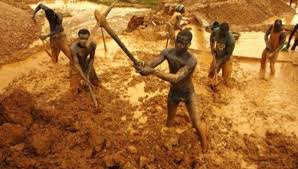
Small-scale and artisanal gold mining (ASGM) is a cornerstone of Zimbabwe’s gold sector, contributing over 60% of gold delivered to FPR. Involving 500,000 to 1.5 million miners, including men, women, and youth, ASGM thrives due to immediate USD payments and low entry barriers. Miners use rudimentary tools to exploit alluvial gold along rivers and narrow quartz veins in greenstone belts. The 1961 Mines and Minerals Act allows permanent residents to apply for mining licenses, encouraging ASGM. FPR’s decentralized buying centers reduce transport risks, paying on the spot via specific gravity or fire assay methods.
However, challenges include smuggling ($1.2 billion annually), environmental degradation, and gang violence at mining sites. Government policies tolerate ASGM, but legal ambiguities and underpayment by FPR fuel illicit trade. Formalization efforts, supported by studies in Shurugwi and Kadoma, aim to integrate ASGM with large-scale mining, enhancing sustainability and reducing conflict.
Where Most Gold is Found in Zimbabwe
The majority of Zimbabwe’s gold is found in greenstone belts, which cover 60% of the country’s granitic Zimbabwe Craton. Key regions include: Mining gold in Zimbabwe
- Gwanda Greenstone Belt: Hosts Blanket and Sabi mines, with 268 historical mines and rich Archaean deposits.
- Bubi Greenstone Belt: Home to Bilboes and Pickstone-Peerless, known for high-grade veins.
- Bindura Region: Freda Rebecca exploits local shear zones, with significant reserves.
- Kadoma Area: Cam and Motor and other mines tap rich greenstone deposits.
- Limpopo Mobile Belt: Southern deposits, including Renco, yield substantial gold.
- Piriwiri Rocks: Northwestern Proterozoic formations host smaller but viable deposits.
Alluvial gold is prevalent along rivers draining greenstone belts, supporting ASGM. The country holds 13 million tons of proven reserves, with only 580 tons exploited historically, indicating vast untapped potential.
When Gold Mines Were Established in Zimbabwe
Gold mining began around 320 AD, with systematic exploitation by the 7th century. Colonial-era mines emerged in the late 19th century, with key establishments including:
- Matabeleland Mine (1904): Later Blanket, industrialized by Matabele Reefs.
- Cam and Motor (early 1900s): Became a major producer by the 1930s.
- Freda Rebecca (1988): Modern operations built on ancient workings.
- Eureka (1990s): Developed as a modern open-pit mine.
- Pickstone-Peerless (2015): Commissioned with new infrastructure.
Many mines trace roots to ancient workings rediscovered by Europeans, with modern operations peaking post-independence (1980) and post-dollarization (2009). Dormant mines, like Golden Kopje, await revival through exploration. Mining gold in Zimbabwe

Types of Gold in Zimbabwe
Zimbabwe’s gold occurs in various forms, primarily tied to geological settings:
- Primary Gold: Found in quartz veins within greenstone belts, as at Freda Rebecca and Blanket. High-purity (24K) gold is extracted via conventional mining and leaching.
- Alluvial Gold: Deposited along rivers like the Mazowe, mined by ASGM using panning and sluicing. Typically fine particles, it’s less pure but abundant.
- Refractory Gold: Sulphide-bound gold, processed via BIOX plants at Bilboes and Cam and Motor, requiring advanced technology for extraction.
- Eluvial Gold: Weathered deposits near primary sources, mined artisanally with minimal equipment.
All gold is ultimately refined to 99.9% purity for export, sold at international spot prices. No distinct “types” exist post-refining, but xtraction methods vary by deposit.
Additional Insights into Gold Mining in Zimbabwe (2025)
Zimbabwe’s gold sector faces both opportunities and challenges in 2025. The government aims for a $12 billion mining industry by 2023, with gold as the primary driver. However, issues persist:
- Smuggling: FPR’s centralized buying scheme underpays miners, encouraging illegal exports. Liberalizing trade could boost output.
- Violence: Gang conflicts at ASGM sites, particularly in Shurugwi and Kadoma, have killed hundreds. Strengthening law enforcement and legalizing cooperatives could mitigate this.
- Investment: Foreign investors from Canada, the UK, and China are drawn to Zimbabwe’s reserves, but power shortages and policy uncertainties deter growth.
- Technology: Large-scale mines adopt BIOX and solar power (e.g., Blanket), but ASGM relies on antiquated methods, limiting efficiency.
- Exploration: Underexplored deposits, especially in the Zimbabwe Craton, offer potential for world-class discoveries, as seen at Freda Rebecca.
The Bilboes project exemplifies Zimbabwe’s potential, with its 150,000-ounce target by 2028. Small-scale miners, despite challenges, remain vital, producing 17.5 tons in 2019. Formalization, better pricing, and dispute resolution are critical for growth. Zimbabwe’s gold rush, fueled by economic needs and global demand, continues to evolve, with 2025 poised for further expansion if structural issues are addressed. Mining gold in Zimbabwe