Discover the Top 5 Gold Producing Countries in Africa (2025)
top 5 gold producing countries in Africa, Africa is home to some of the richest gold deposits in the world, and in 2025, the continent continues to lead the global gold supply with record-breaking output. From the legendary mines of Ghana to the rising gold fields in Uganda, these five African nations are not only driving production but also offering massive opportunities for investors, traders, and bulk buyers. If you’re looking to source gold across Africa at competitive market rates, GoldPricesInAfrica.com is your trusted partner. With deep connections in the top gold-producing countries, we help you navigate sourcing, pricing, and logistics securely and transparently.
In this article, we shall take you through the top 5 gold-producing countries in Africa, factors to Consider When Choosing a Gold-Producing Country, largest gold exporters in Africa in 2025. top 5 gold producing countries in Africa
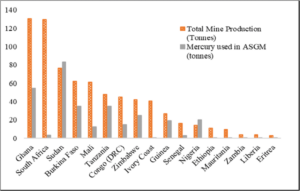
- Ghana – Africa’s Gold Leader
The Top 5 Gold Producing Countries in Africa (2025)
- Ghana – Africa’s Gold Leader
Gold Output (2025): Approx. 140 metric tons
Ghana remains the top gold producer in Africa, thanks to its well-established mining sector and investor-friendly environment. The country is home to major players like AngloGold Ashanti and Gold Fields. Ghana’s robust infrastructure and government support have kept production stable and internationally competitive. top 5 gold producing countries in Africa
Gold Production & Export Value
- In 2023, Ghana produced about 4 million ounces (130,000 kg) of gold, representing around 4% of global output.
- In 2024, production rose to approximately 4.3–4.5 million ounces, maintaining its status as Africa’s top gold producer, ahead of South Africa and others.
- Gold exports in 2024 surged to approximately US$11.6 billion, a 53% jump from the previous year. Exports made up around 55–57% of Ghana’s total exports.
- Over US$ 5 billion of that came from legal small-scale and artisanal miners.
- In April 2025 alone, Ghana exported about 9.3 tons of gold, generating US$ 897.6 million.
Economic Context
- Gold represented 55.3% (GH₵163 billion) of Ghana’s exports in 2024; combined with petroleum and cocoa, these made up 83.4% of export revenue.
- Gold revenues helped Ghana achieve a trade surplus (GH₵44.7 billion) and improved its fiscal buffer.
Key Mining Regions & Mines
Major commercial gold-producing regions in Ghana include:
- Ashanti Region: Home to Obuasi and Ahafo
- Western Region: Houses Tarkwa and Damang
- Eastern Region: Location of the Akyem mine
- Numerous small-scale artisanal mines spread across 12 of the 16 regions
Major Mines & Owners
- Obuasi (Ashanti). Operated by AngloGold Ashanti, an underground mine resumed production in 2020, outputs ~127,000 oz in 2020; long production history.
- Ahafo (Ashanti/Brong-Ahafo). Owned by Newmont, open-pit, 500,000 oz annually.
- Akyem (Eastern). Also, Newmont, open-pit, yields 400,000 oz; in operation since 2013.
- Tarkwa (Western). Managed by Gold Fields, open-pit, 550,000 oz/year with large reserves.
- Damang (Western). Another Gold Fields asset, with 10 million oz reserves.
- Chirano. Now under Asante Gold, previously Kinross, 200,000 oz annual production.
- Edikan (Central). Run by Perseus Mining, around 200,000 oz/year.
- Namdini (Upper East). A new mine started in 2024, targeting 300,000 oz annually.
Key Mining Companies
- AngloGold Ashanti. Major Player with Obuasi; invests in local communities & modern underground mining tech.
- Newmont. Operates Ahafo & Akyem; leads in operational innovation and CSR initiatives.
- Gold Fields. Owns Tarkwa & Damang; focuses on modernization, energy efficiency, and community engagement.
- Asante Gold. Manages Chirano; emphasizes sustainability, upgrading processes, and expanding exploration.
- Perseus Mining. Operates Edikan, with stable output and a regional growth strategy.
Artisanal & Illegal (Galamsey) Mining
- Small-scale miners produced over 1.2 million oz in early 2024, accounting for around 40–43% of total output.
- Galamsey, often illegal, causes widespread environmental damage, mercury pollution (affecting ~65% of water sources), health hazards, and revenue losses.
- Government reforms include the Gold Board (GoldBod), which now controls all artisanal gold buying and exporting; non-licensed holders must exit by April 2025.
- Military action at Obuasi reflects ongoing conflict between legal operators and illegal miners.
Ghana’s gold sector remains its economic cornerstone. Strategic reforms under GoldBod aim to better harness artisanal mining potential while large-scale operators push modernization and community-focused initiatives.
- South Africa – Rich Reserves
Gold Output (2025): Approx. 110 metric tons
South Africa has long been recognized as one of the most prolific gold-producing countries in the world. Historically, it was the global leader in gold production throughout much of the 20th century, thanks to its vast reserves and well-developed mining infrastructure.
The country’s most famous gold belt is the Witwatersrand Basin, discovered in 1886, which has produced over 40% of all the gold ever mined globally. Even today, South Africa remains a top 10 gold producer, contributing significantly to global output, with annual production averaging around 100 metric tonnes in recent years.
Strengths of South African Gold Mining
- World-Class Mining Infrastructure: South Africa has some of the most advanced mining infrastructure on the continent, including deep-level shafts, advanced ventilation systems, and mechanized mining equipment.
- Skilled Workforce: Decades of mining history have cultivated a highly skilled labor force with deep technical expertise.
- Established Mining Companies: Major players like AngloGold Ashanti, Gold Fields, and Harmony Gold operate in the region, contributing to robust local and international investment in the sector.
- Massive Reserves: Despite declining output, the country still holds some of the largest gold reserves underground, particularly in deep-level mines.
Challenges Facing the Industry
- Declining Production: Gold output has decreased significantly from peak levels in the 1970s and 1980s due to ore depletion and rising costs.
- Deep and Expensive Operations: Many gold deposits lie more than 3 kilometers underground, making operations technically complex and costly.
- Labor Disputes and Safety Concerns: Frequent strikes and safety incidents have affected productivity and investor confidence.
- Aging Infrastructure: Much of the mining infrastructure is outdated, requiring significant reinvestment to maintain output and safety.
- Policy Uncertainty: Regulatory changes, including ownership laws and environmental requirements, have sometimes hindered investor interest.
Key Refineries in South Africa
South Africa is home to some of the most advanced precious metal refineries on the continent. These facilities process mined gold into high-purity bullion suitable for international markets.
Rand Refinery – The Gold Standard
- Location: Germiston, near Johannesburg
- Established: 1920
- Capacity: Over 600 tonnes of gold annually
- Key Functions: Refining, smelting, assay, and production of kilobars and 400 oz London Good Delivery bars
- Accreditations: LBMA (London Bullion Market Association) Good Delivery List
Rand Refinery is the largest integrated single-site precious metals refining and smelting complex in the world, and a vital component of South Africa’s gold export value chain. top 5 gold producing countries in Africa
Gold Export Routes from South Africa
South Africa’s gold export network is efficient and well-regulated, ensuring reliable delivery to global markets.
Main Export Logistics
- Air Transport: Most gold is exported via OR Tambo International Airport in Johannesburg. This hub has secure vault facilities and dedicated services for high-value cargo.
- Maritime Ports (Limited use): While sea freight is more common for bulk minerals like coal or iron ore, some gold may be shipped via Durban Port in special circumstances.
- Customs and Compliance: All gold exports are regulated by the South African Revenue Service (SARS) and the South African Reserve Bank (SARB), which monitor and approve transactions through strict compliance and licensing.
Top Export Destinations
- Switzerland. Home to major gold refineries and banks
- United Arab Emirates (UAE). particularly Dubai, a leading gold trading hub
- United Kingdom. For LBMA-traded gold
- India and China. Major consumers of gold jewelry and bullion
Note
South Africa remains a historic powerhouse in global gold mining, with an enduring legacy and deeply embedded industry knowledge. While it faces significant challenges like aging infrastructure and high operational costs, the country continues to play a pivotal role in the global gold supply chain, thanks to its advanced refineries, strategic export routes, and massive underground reserves. For investors, traders, and industrial players, South Africa offers both opportunity and insight into the evolving dynamics of African gold production. top 5 gold producing countries in Africa
3 Mali – West Africa’s Rising Gold Giant
Gold Mining Zones in Mali
Mali has emerged as the third-largest gold producer in Africa, following Ghana and South Africa. The country’s geology is part of the West African Birimian Greenstone Belt, a region rich in gold deposits and favorable to large-scale mining.
Key Mining Regions:
- Sadiola and Yatela (Kayes Region):
- Located in western Mali near the border with Senegal.
- Historically operated by AngloGold Ashanti and IAMGOLD.
- Sadiola is known for both open-pit and oxide gold resources.
- Loulo-Gounkoto Complex (Kenieba, Kayes Region):
- Operated by Barrick Gold, one of the most productive mining zones in West Africa.
- Produces hundreds of thousands of ounces annually.
- Includes both underground and open-pit operations.
3. Morila Gold Mine (Sikasso Region):
- Previously a flagship mine for AngloGold Ashanti and Randgold.
- Currently undergoing redevelopment by Firefinch Ltd. with strong tailings potential.
- Fekola Mine (Kenieba, near Senegal border):
Operated by B2Gold.
- A major contributor to Mali’s recent surge in gold output.
- One of the lowest-cost, high-output gold mines in Africa.
- Syama Mine (Southern Mali):
- Operated by Resolute Mining.
- Known for its advanced underground mining operations and automation technologies.
Political Outlook: Challenges and Stability Risks
Military Rule and Sanctions:
Since the 2020 and 2021 coups, Mali has been under military leadership, which has led to diplomatic tensions with ECOWAS and international partners. Although the country has pledged to return to democratic governance, delays in elections have raised concerns.
Impact on Mining:
- Stable Mining Contracts: Despite political instability, most foreign mining companies continue to operate with minimal disruption.
- Resource Nationalism Risk: The government has signaled intentions to revise mining codes to increase state revenue, which could impact investor confidence. top 5 gold producing countries in Africa
- Security Concerns: Terrorist activity in northern and central Mali poses risks to logistics and worker safety, though most mining operations are concentrated in the more stable southwest regions.
Export Destinations for Malian Gold
Mali is a landlocked country, so gold is exported via neighboring countries through road and air transport. Gold exports represent over 75% of Mali’s total export value, making it the backbone of the national economy.
Primary Export Destinations:
- United Arab Emirates (UAE). Especially Dubai, a global gold trading hub and the top destination for Malian gold.
- Switzerland. For refining and banking, a traditional buyer of African gold.
- India. A key global consumer of gold jewelry and bullion.
- China. For both industrial use and reserve accumulation.
Export Logistics:
- Overland Routes: Gold is transported under security escort through Senegal or Côte d’Ivoire to port cities like Dakar or Abidjan.
- Air Freight: Some exports leave via Bamako-Sénou International Airport, under strict regulation and security measures.
- Regulatory Oversight: The Ministry of Mines and the Customs Authority of Mali oversee all formal gold exports, although concerns remain about illegal gold smuggling, especially to the UAE.
Major Gold Mining Companies in Mali
Mali’s mining industry is dominated by a mix of international and local companies, with foreign direct investment driving much of the sector’s growth. top 5 gold producing countries in Africa
Top Operators:
1 Barrick Gold Corporation
- Operates the Loulo-Gounkoto complex.
- One of the most significant players in Mali’s gold sector.
- Partners with the government through joint venture agreements.
2 B2Gold
- Runs the Fekola Mine, one of the most profitable gold mines in Africa.
- Known for strong corporate social responsibility programs.
3 Resolute Mining
- Operates the Syama Underground Mine.
- Investing in automation and cost-cutting technologies.
4 Firefinch Ltd.
- Reviving the Morila Gold Mine with updated mining strategies and expansion of tailings operations.
5 Hummingbird Resources
- Owns the Yanfolila Gold Mine in southern Mali.
- Medium-scale operation with growth potential.
Government Participation:
- The Government of Mali typically holds a 10-20% stake in most mining projects, allowing it to benefit from revenues while maintaining investor confidence.
Note
Mali has firmly established itself as West Africa’s rising gold giant, leveraging its rich geology and growing mining infrastructure. While political instability and regional insecurity pose risks, gold production remains resilient, and the country continues to attract major international investment. With strong export ties to global gold hubs and a rich pipeline of active mines, Mali’s gold sector is poised for continued growth, making it a key player in Africa’s mining landscape.
4 Burkina Faso – High Potential, Security Risks
Mining Growth and Exploration Activity
Burkina Faso has rapidly become one of West Africa’s most dynamic gold producers, with significant growth over the past two decades. Once a minor player, the country is now among the top 5 gold producers in Africa, boasting substantial untapped reserves and growing exploration interest.
Gold Production Highlights:
- Burkina Faso produced over 100 metric tons of gold in recent years, surpassing more established producers like Mali in certain periods.
- Gold accounts for over 75% of the country’s export revenue, making it the cornerstone of the economy.
- The mining sector contributes around 13% to Burkina Faso’s GDP and employs tens of thousands, both directly and indirectly.
Exploration Activity:
- The Houndé Belt and Taparko regions are rich in gold mineralization and have attracted considerable exploration.
- International junior and mid-tier companies, including Orezone Gold, West African Resources, and Roxgold (now part of Fortuna Silver Mines), are actively exploring and expanding.
- New deposits continue to be discovered, especially in the southern and western parts of the country, which remain under-explored compared to Ghana and Mali.
Key Producing Mines:
- Essakane Mine. Operated by IAMGOLD, Burkina Faso’s largest gold mine.
- Sanbrado Mine. Operated by West African Resources, fast-tracked to production and highly profitable.
- Houndé Mine. Operated by Endeavour Mining, a cornerstone asset in the region.
- Taparko Mine. One of the earliest modern mines in the country, with new ownership targeting redevelopment.
Government Policies and Mining Regulations
Pro-Mining Investment Climate
The Government of Burkina Faso has historically maintained a pro-investment and mining-friendly legal framework designed to attract foreign capital and technical expertise. top 5 gold producing countries in Africa
- Mining Code Reforms: Updated in 2015 and 2017 to balance investor returns with local benefits.
- Corporate Tax Rate: 27.5% for mining companies, with specific fiscal terms defined in each mining convention.
- State Participation: The government retains a 10% free-carried interest in all mining projects and may negotiate for additional equity.
- Mining Conventions: Provide legal and fiscal stability for up to 20 years, protecting investors from regulatory surprises.
Local Content and Community Development:
- Mining companies are required to invest in local community development through the Mining Fund for Local Development (FMDL), contributing 1% of gross revenues.
- Emphasis on employment of local labor, training, and environmental management.
Security and Operational Risks
While Burkina Faso’s geology offers immense mining potential, the country is challenged by rising insecurity, especially in the northern and eastern regions.
Security Threats:
- Armed insurgent groups, including jihadist factions, have disrupted supply chains and access to remote mine sites.
- Attacks on convoys, exploration camps, and workers have increased since 2018, particularly near the borders with Mali and Niger.
- Mining firms now invest heavily in private security, armored transport, and risk intelligence to protect assets and personnel.
Impact on Operations:
- Some exploration programs have been suspended or delayed in high-risk areas.
- Larger companies like Endeavour Mining and IAMGOLD have continued operating, but often under tight security protocols.
- The government collaborates with mining companies to secure key infrastructure zones, but capacity remains limited in remote areas.
Note
Burkina Faso is a high-potential gold producer with substantial mineral wealth and a favorable investment framework. Exploration success, low operating costs, and discoveries have positioned the country as a critical player in West African gold mining. However, the growing threat of insurgency poses serious operational and humanitarian challenges. For investors and operators, Burkina Faso presents a high-reward but high-risk environment, requiring robust security planning and close government engagement.
5 Uganda – The New Gold Frontier in East Africa
Recent Discoveries & Output Surge
Uganda has recently emerged as a major frontier for gold exploration and production in East Africa. Historically overshadowed by regional players like Tanzania and Sudan, Uganda is now making international headlines following significant gold discoveries and a push for industrial-scale mining. top 5 gold producing countries in Africa
Massive Gold Discoveries (2022–2024):
- In 2022, Uganda announced the discovery of over 31 million metric tonnes of gold ore, with an estimated 320,000 tonnes of refined gold potential.
- The most notable discovery occurred in the Karamoja region, specifically in areas like Kassanda, Buhweju, and Moroto, which have long been known for artisanal mining.
- These findings attracted interest from both local and international investors, especially from Middle Eastern and Chinese firms.
Rising Gold Output:
- Uganda’s gold production has surged in the past five years, with official exports climbing significantly since 2017.
- According to government data, gold became Uganda’s top foreign exchange earner by 2021, surpassing coffee.
- Production is fueled by both industrial mining operations and formalized artisanal mining, especially after a crackdown on illegal exports and smuggling.
Notable Operators and Investments:
- Wagagai Mining Company, a Chinese firm, is developing a $200+ million gold project in Busia District, which includes construction of a refinery and processing plant.
- Local companies are being incentivized to scale operations under the government’s new mining regime, which aims to maximize in-country value addition.
Refining & Export Improvements
Uganda has made substantial strides in developing gold refining capacity and formalizing export processes, enabling the country to retain more value from its mineral resources and reduce reliance on neighboring countries.
New and Upgraded Refineries:
- Entebbe Gold Refinery
- Commissioned in 2015, this was the first major gold refinery in Uganda.
- Can refine up to one ton of gold per day.
- Processes gold from Uganda and neighboring countries like the DRC, South Sudan, and Tanzania.
- Wagagai Refinery (Busia)
- Currently under construction as part of the Wagagai Mining Project.
- Expected to enhance local refining capability and create hundreds of jobs.
- Supports government goals of in-country beneficiation.
- African Gold Refinery (AGR)
- Another key player based in Entebbe, though it has faced scrutiny over sourcing practices.
- Has helped establish Uganda as a regional gold refining hub.
Improvements in Gold Export Policies:
- Formal Licensing and Oversight: The Ugandan Directorate of Geological Survey and Mines (DGSM) now mandates that all gold exporters must register and comply with traceability standards.
- Crackdown on Smuggling: In recent years, the government has tightened border controls and increased transparency in the gold trade, reducing illicit flows to the UAE and other buyers.
- Regional Trade Links: Uganda exports refined and raw gold primarily to:
- United Arab Emirates (UAE). Historically, the top buyer.
- Turkey and India. Increasingly important destinations.
- Switzerland. For bullion banking and industrial uses.
Integration with the African Continental Free Trade Area (AfCFTA):
- Uganda is positioning itself as a regional gold refining and re-export hub, leveraging AfCFTA to facilitate intra-African trade and reduce dependence on European intermediaries.
Note.
Uganda is fast becoming East Africa’s new gold frontier, driven by major discoveries, rising output, and bold government initiatives to formalize and industrialize the sector. With large-scale mining projects underway and a growing network of modern refineries, Uganda is poised to compete with Africa’s traditional gold giants. Continued improvements in regulation, infrastructure, and export systems will be key to ensuring that this momentum benefits both the national economy and local communities.
Africa’s Gold Market Outlook for 2025
The African gold industry is expected to grow steadily, driven by:
- High global demand for gold as a hedge against inflation
- New investments in mining technology and exploration
- Governments promoting local refining and value addition
Countries like Uganda, Tanzania, and the DRC are gaining attention for their growth potential, while giants like Ghana and South Africa continue to lead in output and infrastructure.
Factors to Consider When Choosing a Gold-Producing Country
- Gold Production Volume and Reserves
Always choose a country with consistent or growing gold output, backed by verified reserves, and countries like Ghana, South Africa, and Uganda have well-documented gold deposits, which lowers supply risk. Always look for recent geological surveys and government reports confirming resource availability.
2. Political and Regulatory Stability
A stable government and clear mining laws reduce the risk of disruptions, and countries with transparent licensing procedures, tax frameworks, and export guidelines offer safer investment environments. Ghana and Mali have investor-friendly policies, while Uganda is rapidly improving its regulatory systems. top 5 gold producing countries in Africa
- Mining and Refining Infrastructure
Strong infrastructure, including roads, refineries, and export logistics, always ensures smoother operations, and countries with established gold refineries and formal trade routes are more reliable for buyers. South Africa (Rand Refinery), Uganda (AGR, Bullion Refinery), Ghana (PMMC)
- Artisanal vs. Industrial Mining Balance
Always understand if the country relies on industrial-scale mining or artisanal mining, and industrial mining offers reliability and scale, while artisanal sectors can be unpredictable but offer lower entry costs. Countries like Sudan and Uganda have both, but they are improving ASM accountability.
- Export Compliance and Market Access
Always choose countries that maintain clear gold export regulations and have access to major international markets like the UAE, India, and Switzerland, and avoid regions with high levels of smuggling or trade bans. Always check for Licensing requirements, gold purity standards, and destination partnersSure! Here’s an SEO-optimized article on the 5 Largest Gold Exporters in Africa in 2025, including Uganda’s emerging role:
Largest Gold Exporters in Africa in 2025
Africa remains a vital player in the global gold trade, not just for its production but also for its export capabilities. In 2025, several African countries have positioned themselves as leading exporters, supplying refined and unrefined gold to markets in Asia, the Middle East, and Europe. Here are the top 5 gold-exporting countries in Africa in 2025, including the remarkable rise of Uganda.
- Ghana – Africa’s Top Gold Exporter
Estimated Gold Exports (2025): Over $7.5 billion
Ghana has held its position as Africa’s number one gold exporter, thanks to robust production, modern refineries, and strong export channels. The country exports both raw and refined gold to destinations such as India, the UAE, and Switzerland.
- Top Export Destinations: India, UAE, Switzerland
- Key Export Companies: Gold Fields Ghana, Asanko Gold, Precious Minerals Marketing Company (PMMC)
- Infrastructure: Advanced refining, secure transport, supportive regulation
- South Africa – Historic Leader with Modern Output
Estimated Gold Exports (2025): $6.2 billion
Although South Africa’s gold production has declined compared to its past, its refining and export infrastructure remain world-class. South Africa refines large volumes of gold from domestic and regional sources and maintains strong export markets in Europe and China.
- Top Export Destinations: UK, China, UAE
- Notable Refineries: Rand Refinery (among the largest in the world)
- Strength: Long-established gold value chain and financial services support
- Sudan – Strong Exports from Artisanal Production
Estimated Gold Exports (2025): $5.4 billion
Sudan’s gold exports are heavily driven by artisanal and small-scale mining (ASM), which accounts for over 70% of national production. Despite minimal formal infrastructure, gold remains a lifeline for Sudan’s economy.
- Top Export Markets: UAE, Turkey
- Challenges: Informal trade routes, smuggling
- Improving Trends: Government initiatives to license artisanal miners and formalize trade
- Mali – A Stable Exporter with Strong Global Links
Estimated Gold Exports (2025): $5.1 billion
Mali exports the majority of its gold through formal channels and remains West Africa’s second-largest gold exporter after Ghana. The government has improved export transparency, attracting more investors.
- Top Buyers: Switzerland, India, China
- Key Export Routes: Gold transported via Dakar port or air freight
- Regulatory Support: Central Bank and Ministry of Mines oversight
- Uganda – The Fastest-Rising Gold Exporter in East Africa
Estimated Gold Exports (2025): $2.4–3.0 billion
Uganda has seen explosive growth in gold exports, thanks to major discoveries, new gold refineries, and improved tracking systems. The government’s focus on formalizing artisanal mining and boosting domestic refining has paid off.
- Top Export Markets: UAE, India, China
- Major Refineries: African Gold Refinery (AGR), Bullion Refinery
- Notable Development: Over 31 million tons of gold ore discovered in Karamoja and eastern Uganda.
Africa’s Gold Export Outlook for 2025
The continent’s total gold export value is expected to surpass $30 billion in 2025, driven by:
- High global demand
- Local refining and beneficiation
- Formalization of artisanal mining sectors
- Investment in logistics and regulation
Countries like Tanzania, DR Congo, and Zimbabwe are also making strides in exports and may enter the top five in the coming years. top 5 gold producing countries in Africa
Conclusion
Africa remains a gold powerhouse, with five nations shaping the continent’s global influence. While Ghana and South Africa dominate in output, Uganda’s entry into the top ranks signals a new era of gold growth in East Africa. As regulatory frameworks improve and technology advances, investors and traders alike should keep a close eye on Africa’s ever-evolving gold landscape. top 5 gold producing countries in Africa
Need up-to-date gold prices or help sourcing gold in Africa?
Frequently Asked Questions on Gold Producing Countries in Africa
- Which country is the largest gold producer in Africa in 2025?
Ghana remains Africa’s top gold producer in 2025, with over 130 metric tons annually, thanks to its modern mining infrastructure and stable investment environment. top 5 gold producing countries in Africa
- Is South Africa still a major gold producer?
Yes, despite declining output, South Africa is still among the top gold producers in Africa due to its deep-level mines and advanced mining technology. top 5 gold producing countries in Africa
- How has Uganda become a gold-producing country?
Uganda entered the top producers in 2025 after significant gold discoveries and increased refining capacity, particularly in Karamoja, Mubende, and Busia regions.
- What factors contribute to gold production growth in Africa?
Key factors include:
- New gold discoveries
- Investment in mining and refining infrastructure
- Supportive government policies
- Rising global gold prices
- Which African countries are best for investing in gold mining?
Top investment destinations include Ghana, Mali, Burkina Faso, Uganda, and Tanzania due to rich reserves and favorable legal frameworks.
- What is the role of artisanal mining in Africa’s gold production?
Artisanal and small-scale mining (ASM) contributes significantly, especially in countries like Sudan, DR Congo, and Uganda, often accounting for 60–70% of output.
- Are gold exports from Africa legal and regulated?
Yes, most African countries have legal frameworks for gold export. However, formalization is still ongoing in countries with high levels of informal mining, like Sudan and DRC.
- What are the challenges facing gold producers in Africa?
Common challenges include:
- Insecurity and conflict in some regions
- Illegal mining and smuggling
- Infrastructure gaps
- Environmental concerns
- Which country in East Africa is growing fastest in gold production?
Uganda leads East Africa in gold growth, with rising production, investment in refineries, and stronger government oversight. top 5 gold producing countries in Africa
- How can I track real-time gold prices in African countries?
You can track live gold prices in African markets at Gold Buyers Africa, which offers up-to-date rates by country and gold purity.