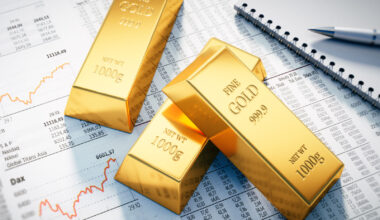
1kg Gold Price in Ghana, Uganda, South Africa, Tanzania (Live Rates)
The 1-kilogram gold price in Africa today is closely tied to the international gold spot market, which is traded in USD on global exchanges such as the London Bullion Market (LBMA). In 2026, gold continues to trade at historically strong levels, driven by inflation concerns, currency fluctuations, and high demand from central banks and investors.
At the global benchmark level, 1 gram of 24K gold is approximately $135 (2026 estimate). Since 1 kilogram equals 1,000 grams, the base value of 1kg of pure gold is roughly $135,000 before any premiums, refinery charges, taxes, or export costs. However, across African markets, actual transaction prices vary slightly depending on country-specific factors such as mining origin, export regulations, certification requirements, and buyer demand.
In key African gold hubs like Uganda, Tanzania, and South Africa, the 1kg gold price typically ranges between $134,500 and $150,000, reflecting differences in logistics, compliance standards, and local trading structures. Uganda and Tanzania often offer more competitive pricing due to their strong artisanal and industrial mining output, while South Africa may show slightly higher pricing due to stricter refinery and regulatory frameworks.
This guide provides a clear, structured, and data-driven breakdown of the 1kg gold price in Africa today, helping buyers, investors, and traders understand real market conditions. It combines global benchmark pricing with localized African market insights to support informed decision-making, whether you are purchasing for investment, export, or long-term wealth preservation.
1Kg of Gold Price in Ghana Uganda South Africa Tanzania
The following table shows estimated live 1kg gold prices for 24K pure gold across key African markets. These figures are based on the global spot price benchmark ($135,000 per kg) adjusted for local premiums, refinery costs, and export conditions.
Note: Prices change daily depending on the LBMA spot price, USD exchange rate, and local market demand.
Live 1kg Gold Prices in Africa (Today)
| Country | Price per 1kg (USD) | Local Currency Estimate | Market Insight |
| Uganda | $135,000 – $148,000 | UGX fluctuates with the USD rate | Strong export-driven pricing, competitive artisanal supply |
| Tanzania | $134,500 – $147,500 | TZS equivalent varies daily | Stable mining production keeps pricing close to spot |
| South Africa | $136,000 – $150,000 | ZAR equivalent | Higher refinery standards and compliance costs |
| Ghana | $135,500 – $149,000 | GHS equivalent | Strong gold export market with moderate premiums |
Factors Influencing Gold Prices in Uganda, Tanzania, South Africa, and Ghana
Below is a clear breakdown of the main factors that influence gold prices in African markets, showing how each factor affects pricing across Uganda, Tanzania, South Africa, and Ghana.
Key Factors Affecting Gold Prices in Africa
| Factor | Uganda | Tanzania | South Africa | Ghana | Impact on Price |
| Global Gold Spot Price (LBMA) | Strong influence | Strong influence | Strong influence | Strong influence | Sets the base price for all countries |
| USD Exchange Rate | High volatility impact | High volatility impact | Moderate impact | Moderate impact | Weak local currency increases the gold price |
| Local Gold Supply (Mining Output) | High artisanal supply | Strong mining supply | Industrial mining | Very high production | Higher supply can reduce premiums |
| Government Regulations & Taxes | Moderate export rules | Moderate export rules | Strict compliance laws | Structured export system | Higher regulation increases the final cost |
| Refining & Certification Costs | Low–moderate | Low–moderate | High (advanced refining) | Moderate | Impacts purity verification costs |
| Transport & Security Costs | Medium risk logistics | Medium risk logistics | High infrastructure cost | Medium logistics cost | Increases the final delivery price |
| Market Demand (Local & International) | Growing investor demand | Strong export demand | Institutional demand | High jewelry + export demand | Higher demand increases price pressure |
| Market Stability & Risk Premium | Medium stability | Medium stability | High stability | Medium stability | Higher risk = higher premiums |
Where to Buy Certified 1kg Gold Bars Safely in Uganda, Tanzania, South Africa, and Ghana
Buying a 1kg certified 24K gold bar in Africa requires careful due diligence because the market includes both legitimate exporters and unverified dealers. The safest purchases are usually made through licensed refineries, commercial banks, government-approved exporters, and internationally recognized bullion dealers.
Below is a structured guide showing safe buying channels by country, focused on certification, transparency, and export compliance.
Safe Places to Buy 1kg Certified Gold Bars in Africa
| Country | Safe Buying Channels | Certification Type | Risk Level | Buyer Note |
| Uganda | Licensed gold exporters, refinery-linked dealers, registered trading companies | Assay certificate + export license | Medium | Always verify the export permit and KYC documents |
| Tanzania | Government-licensed mining exporters, Dar es Salaam bullion dealers, refinery partners | Assay certificate + Ministry of Minerals approval | Medium | Prefer exporters registered with the mining authorities |
| South Africa | Rand Refinery, commercial banks, and accredited bullion dealers | LBMA-accredited bars + refinery certificate | Low | One of the safest markets due to strict regulation |
| Ghana | PMMC (Precious Minerals Marketing Company), licensed export companies, refinery-backed dealers | Government assay + export documentation | Low–Medium | Strong regulatory framework for gold exports |
Key Safe Buying Channels Explained
1. Licensed Refineries and Government-Approved Entities
These are the safest sources because they:
- Produce LBMA-standard or government-certified gold bars
- Provide traceable assay certificates
- Follow strict export compliance rules
Example: Rand Refinery (South Africa) is globally recognized for bullion quality.
- National Gold Authorities & Marketing Companies
Some African countries regulate gold exports through official bodies:
- Ghana: PMMC (Precious Minerals Marketing Company)
- Tanzania: Ministry of Minerals-approved exporters
- Uganda: Licensed export companies under the Ministry of Energy & Mineral Development
These institutions ensure legal sourcing and export documentation.
- Licensed Export Traders (Private Sector)
These companies:
- Buy directly from miners or refineries
- Handle export logistics
- Provide assay certificates and KYC documentation
Always verify:
- Business registration
- Export license
- Physical office address
- Commercial Banks (Limited Availability)
In some cases:
- Banks may offer bullion services (mainly South Africa)
- Transactions are highly secure but limited in availability
Important Safety Checklist Before Buying 1kg Gold Bars
Before purchasing, ensure:
- Assay certificate (999.9 purity for 24K gold)
- Export license (if shipping internationally)
- Seller is registered and verifiable
- Payment is traceable (bank transfer preferred)
- Physical inspection or secure vault verification
- No cash-only or unverified middlemen deals
Risk Warning (Critical for Buyers)
High-value gold transactions in Africa are often targeted by:
- Fake sellers using counterfeit certificates
- Unlicensed brokers offering “cheap 1kg bars.”
- Non-export-compliant transactions
If a price is significantly below market rate, it is usually a major red flag.
Hidden Costs in Gold Buying (Africa Market Overview)
Below is a clear breakdown of the hidden costs involved in buying gold in Africa, helping buyers understand what actually affects the final price beyond the global spot rate (~$135/gram in 2026).
Hidden Costs in African Gold Transactions
| Cost Type | What It Covers | Typical Cost Range | Impact on Final Price | Who It Affects Most |
| Taxes (VAT / Withholding Tax) | Government taxes on trading, refining, or export transactions | 1% – 10% | Increases the total purchase cost depending on the country’s laws | Retail & wholesale buyers |
| Export Duties & Royalties | Government charges on gold leaving the country | $2 – $10+ per gram | Adds direct cost to export-ready gold | Export buyers & international investors |
| Dealer Premiums | Broker fees, refinery margins, handling costs | 1% – 10% | The most common hidden cost in pricing | All buyers |
| Logistics & Insurance | Transport, security, and shipment protection | Variable (based on value & distance) | Increases the cost for international deliveries | CIF buyers & exporters |
| Currency Exchange Rates | USD vs local currency fluctuations (UGX, GHS, TZS, ZAR) | Variable daily impact | Can increase or reduce the final local price | Local buyers in Africa |
| Refining & Assay Fees | Testing purity, certification, and processing | $1 – $5 per gram equivalent (varies) | Ensures gold authenticity but adds cost | Bulk & export buyers |
Where to Buy Certified 1kg Gold Bars Safely in Uganda, Tanzania, South Africa, and Ghana
Buying a 1kg certified 24K gold bar in Africa requires careful due diligence because the market includes both legitimate exporters and unverified dealers. The safest purchases are usually made through licensed refineries, commercial banks, government-approved exporters, and internationally recognized bullion dealers.
Below is a structured guide showing safe buying channels by country, focused on certification, transparency, and export compliance.
Safe Places to Buy 1kg Certified Gold Bars in Africa
| Country | Safe Buying Channels | Certification Type | Risk Level | Buyer Note |
| Uganda | Licensed gold exporters, refinery-linked dealers, registered trading companies | Assay certificate + export license | Medium | Always verify the export permit and KYC documents |
| Tanzania | Government-licensed mining exporters, Dar es Salaam bullion dealers, refinery partners | Assay certificate + Ministry of Minerals approval | Medium | Prefer exporters registered with the mining authorities |
| South Africa | Rand Refinery, commercial banks, and accredited bullion dealers | LBMA-accredited bars + refinery certificate | Low | One of the safest markets due to strict regulation |
| Ghana | PMMC (Precious Minerals Marketing Company), licensed export companies, refinery-backed dealers | Government assay + export documentation | Low–Medium | Strong regulatory framework for gold exports |
Key Safe Buying Channels Explained
1. Licensed Refineries and Government-Approved Entities
These are the safest sources because they:
- Produce LBMA-standard or government-certified gold bars
- Provide traceable assay certificates
- Follow strict export compliance rules
Example: Rand Refinery (South Africa) is globally recognized for bullion quality.
- National Gold Authorities & Marketing Companies
Some African countries regulate gold exports through official bodies:
- Ghana: PMMC (Precious Minerals Marketing Company)
- Tanzania: Ministry of Minerals-approved exporters
- Uganda: Licensed export companies under the Ministry of Energy & Mineral Development
These institutions ensure legal sourcing and export documentation.
- Licensed Export Traders (Private Sector)
These companies:
- Buy directly from miners or refineries
- Handle export logistics
- Provide assay certificates and KYC documentation
Always verify:
- Business registration
- Export license
- Physical office address
- Commercial Banks (Limited Availability)
In some cases:
- Banks may offer bullion services (mainly South Africa)
- Transactions are highly secure but limited in availability
Important Safety Checklist Before Buying 1kg Gold Bars
Before purchasing, ensure:
- Assay certificate (999.9 purity for 24K gold)
- Export license (if shipping internationally)
- Seller is registered and verifiable
- Payment is traceable (bank transfer preferred)
- Physical inspection or secure vault verification
- No cash-only or unverified middlemen deals
Gold Price in Uganda Today — Per KG in Ugandan Shillings (UGX)
The gold price in Uganda per kg today is directly linked to the global spot market, which is traded in US dollars, then converted into Ugandan Shillings (UGX) using the current exchange rate. Uganda is widely considered one of the more competitive gold sourcing hubs in East Africa, partly due to artisanal and cross-border supply flows from the DRC region, as well as growing export activity through licensed dealers and refineries.
In 2026, the global benchmark price for 1kg of 24K pure gold is approximately $135,000, but the final price in Uganda varies depending on purity confirmation, export documentation, and dealer premiums.
Gold Price in Uganda Today — Per KG (24K Pure Gold)
| Gold Weight | Price (USD) | Estimated Price (UGX) | Market Insight |
| 1 Gram | $135 – $148 | UGX 500,000 – 560,000 | Spot-linked retail pricing |
| 100 Grams | $13,500 – $14,800 | UGX 50M – 56M | Mid-tier wholesale level |
| 1 Kilogram (1kg) | $135,000 – $148,000 | UGX 500M – 560M+ | Export-grade bullion pricing |
Note: UGX values fluctuate daily based on the USD exchange rate and local dealer premiums.
Market Context: Why Uganda’s Gold Prices Are Competitive
Uganda’s position in the African gold market is influenced by several key structural factors:
- Artisanal gold supply flows from neighboring DRC mining regions
- A growing number of licensed exporters and trading companies
- Competitive pricing due to regional sourcing advantages
- Increasing demand from international buyers and refiners
These dynamics often make Uganda a cost-competitive entry point for gold buyers in East Africa, especially for bulk purchases like 1kg bars.
African Gold Refinery (Kampala) — Key Market Player
A major institution influencing Uganda’s gold trade is the African Gold Refinery (AGR) based in Kampala.
Why it matters:
- Provides refining and purification services
- Produces higher-grade, export-ready gold
- Supports compliance with international standards
- Enhances traceability and certification credibility
AGR plays a central role in transforming raw gold into market-ready bullion suitable for international buyers.
What Buyers Should Know Before Purchasing in Uganda
When buying 1kg gold bars in Uganda, ensure:
- Verified assay certificate (999.9 purity for 24K gold)
- Valid export documentation (if shipping outside Uganda)
- Registered and licensed dealer
- Transparent pricing linked to global spot rate
- Secure payment method (bank transfer preferred)
Risk Awareness
Uganda’s gold market offers strong opportunities, but also requires caution. Buyers should avoid:
- Unlicensed brokers offering below-market pricing
- Cash-only transactions without documentation
- Sellers without a verifiable export history
Legitimate gold should always come with traceable paperwork and refinery certification.
Gold Price in Tanzania Today — Per KG (TZS) 2026
Tanzania’s gold market is strongly influenced by production from major mining areas like Geita, Bulyanhulu, and North Mara, which helps keep supply stable. In Dar es Salaam and other trading hubs, buyers usually see low to moderate premiums, especially for gold nuggets and bullion intended for export.
Gold Price in Tanzania (Per KG – 2026 Estimates)
| Purity / Form | Price per KG (USD) | Price per KG (TZS) | Market Notes |
| 24K Gold (Pure / Bullion) | $134,500 – $147,500 | 350M – 385M TZS | Investment-grade gold, closest to the global spot price |
| 22K Gold (Mixed / Jewelry Grade) | $123,000 – $135,000 | 320M – 352M TZS | Common in the jewelry trade, slightly lower purity |
| Gold Nuggets (Unrefined) | $132,000 – $145,000 | 345M – 378M TZS | Often sourced from the Geita region with small premiums |
| Export-Ready Gold Bars | $135,000 – $148,000 | 352M – 386M TZS | Includes assay, certification, and export documentation |
Key Market Insight (Tanzania Gold)
- Geita mine is one of Africa’s largest gold producers, ensuring strong and consistent supply
- Dar es Salaam traders typically apply low premiums due to proximity to export channels
- Prices are closely linked to the global spot price (~$135 per gram in 2026)
- Final cost depends on purity, form (bars vs nuggets), and export certification
Gold Price in South Africa Today — Per KG (ZAR) 2026
South Africa remains one of the most trusted gold markets globally, largely due to Rand Refinery’s LBMA (London Bullion Market Association) certification, which guarantees international-standard purity and authenticity. In major trading hubs like Johannesburg, gold is typically sold with a 1%–2% premium above the global spot price due to high compliance, refining standards, and strong institutional demand.
Gold Price in South Africa (Per KG – 2026 Estimates)
| Purity / Form | Price per KG (USD) | Price per KG (ZAR) | Market Notes |
| 24K Gold (LBMA Certified Bullion) | $136,000 – $150,000 | 2.55M – 2.82M ZAR | Premium investment-grade gold refined by Rand Refinery |
| 22K Gold (Jewelry Grade) | $123,000 – $135,000 | 2.30M – 2.54M ZAR | Common in jewelry markets, slightly lower purity |
| Investment Bullion Bars (LBMA Standard) | $135,500 – $149,500 | 2.53M – 2.80M ZAR | Highly liquid, globally accepted gold bars |
| Small Bars / Retail Gold | $138,000 – $152,000 | 2.58M – 2.85M ZAR | Higher premiums due to retail packaging and handling |
Key Market Insight (South Africa Gold)
- Rand Refinery (Johannesburg) is one of the most respected gold refineries in the world
- Gold is LBMA-certified, making it highly trusted in global markets (Dubai, London, USA)
- Prices typically include a 1%–2% premium over the global spot price
- Strong regulatory systems ensure high purity and secure transactions
- South Africa is ideal for premium bullion investment rather than cheap sourcing
How to Buy Gold Legally in Ghana, Uganda, Tanzania, and South Africa (2026 Guide)
Buying gold legally in Africa is possible, but it must follow strict government and export regulations. Each country has its own licensing system, approved dealers, and documentation requirements. The safest approach is always to work with government-authorized institutions, licensed refineries, and verified exporters.
Legal Gold Buying Requirements by Country
| Country | Legal Buying Channels | Key Requirement | Must-Have Documents |
| Ghana | PMMC, licensed exporters, Bank of Ghana programs | Must use a government-approved dealer | Assay certificate, export license, invoice |
| Uganda | African Gold Refinery (AGR), licensed exporters | Transaction must be export-compliant | Certificate of origin, assay report, export permit |
| Tanzania | Minerals Commission-approved dealers | Purchase must be from licensed mining/export firms | Mining license verification, export documents |
| South Africa | Rand Refinery, Fidelity Refinery, bullion banks | LBMA-certified gold required for investment bars | LBMA certificate, invoice, refinery documentation |
Step-by-Step: How to Buy Gold Legally in Africa
Step 1: Choose a Licensed Dealer or Refinery
Only work with:
- Government-approved gold traders
- Certified refineries (e.g., Rand Refinery, AGR)
- Registered export companies
Avoid informal sellers or unverified brokers.
Step 2: Request Full Gold Details
Before payment, confirm:
- Purity (24K / 999.9)
- Weight (grams or kilograms)
- Current market price per gram
- Form (bars, nuggets, or bullion)
Step 3: Verify Legal Documentation
Always check:
- Assay certificate (purity proof)
- Certificate of origin
- Export license (for international buyers)
- Company registration details
Step 4: Confirm Pricing and Payment Terms
Ensure:
- Final agreed price (inclusive of fees)
- Payment method (bank transfer or escrow only)
- Written sales agreement or invoice
Step 5: Complete Secure Transaction
- Pay only through traceable banking systems
- Avoid cash-only or unverified crypto deals
- Keep all transaction records
Step 6: Arrange Storage or Export
Depending on your goal:
- Store in a secure vault or bank facility
- Or export through licensed logistics providers (CIF preferred)
- Ensure insurance coverage for transport
Is Gold a Good Investment in Africa Right Now? (2026 Analysis)
Gold remains one of the strongest performing assets globally, and in Africa, it has become even more important due to currency pressure, inflation, and rising demand for safe-haven assets. Since January 2024, gold has gained approximately 138%, and it is up more than 85% from the start of last year, showing a strong long-term bullish trend supported by global and local market forces.
Gold Performance Snapshot (Recent Trend)
| Period | Performance | Market Meaning |
| Since Jan 2024 | +138% | Strong bullish growth driven by global uncertainty |
| Since last year | +85% | Continued upward momentum in safe-haven demand |
| 2026 outlook | Strong upward trend | Supported by inflation and the central bank buying |
Why Gold Is Performing Strongly in Africa
1. Central Bank Demand
African and global central banks are increasing gold reserves to reduce dependence on the US dollar. Countries like Ghana and other emerging economies are strengthening gold-backed strategies, which reduces supply and pushes prices higher.
Impact: Higher institutional demand = stronger long-term price support.
- Inflation Hedge Protection
Inflation continues to reduce purchasing power across many African currencies, such as UGX, GHS, TZS, and ZAR. Gold acts as a store of value, protecting investors from currency depreciation.
Impact: When inflation rises, gold demand increases.
- Currency Volatility in African Markets
Because gold is priced in USD globally, any weakening of local currencies makes gold more expensive in Africa. This creates both:
- Higher local prices
- Stronger investment demand
Example: A stable $135/gram global price can still rise locally due to forex fluctuations.
Local vs Global Investment Perspective
| Perspective | Advantage | Risk |
| Global Investors | Stability, liquidity, international resale value | Currency fluctuations |
| African Investors | Hedge against inflation, strong price growth | Local premium and taxes |
| Short-term traders | Price volatility opportunities | Market timing risk |
| Long-term investors | Wealth preservation and appreciation | Storage/security requirements |
Key Investment Insight
Gold is currently considered a strong investment asset in Africa in 2026 because:
- Prices are in a long-term upward trend
- Central banks are increasing gold reserves
- Inflation remains elevated across many economies
- Supply growth is limited compared to demand
Frequently Asked Questions: How much is 1kg of gold in Uganda, Ghana, Tanzania, and South Africa
- How much is 1 gram of gold in Uganda today?
The price of 1 gram of gold in Uganda today is approximately $75 – $79 (UGX equivalent varies daily), depending on the USD exchange rate and dealer premiums.
- What is the gold price in Ghana in cedis?
The gold price in Ghana depends on the global spot price and is typically around GHS equivalent of $75 – $79 per gram for 24K gold, adjusted daily based on the cedi exchange rate.
- Where can I sell gold in Tanzania?
You can sell gold in Tanzania through licensed mineral dealers, government-approved exporters, and registered gold trading companies in Dar es Salaam and mining regions, ensuring proper documentation and assay certification.
- Is gold cheaper in Uganda than in South Africa?
Yes, gold in Uganda is often slightly cheaper than in South Africa due to lower refinery and compliance costs, but prices still follow the global gold spot market.
- What is the current price of 1kg of gold in Africa?
The 1kg gold price in Africa today ranges between $134,500 – $150,000, depending on country-specific premiums, taxes, and export regulations.
- Why do gold prices change daily in Africa?
Gold prices change daily because they are linked to the global LBMA spot price, USD exchange rates, and local market demand across each country.
- Which African country has the cheapest gold?
Countries like Uganda and Tanzania often offer more competitive gold prices due to strong mining output and lower processing costs compared to industrial markets.
- Can foreigners buy gold in Uganda, Ghana, or Tanzania?
Yes, foreigners can buy gold, but they must use licensed exporters or dealers and comply with national export regulations and KYC requirements.
- What purity of gold is commonly sold in Africa?
The most common purity is 24K (999.9 fine gold) for investment-grade bullion, though lower purities like 22K are also used in jewelry markets.
- Is African gold real and certified?
Yes, but only when purchased from licensed refineries or government-approved dealers. Always request an assay certificate and export documentation.
- Why is South African gold more expensive?
South African gold can be more expensive due to higher refinery costs, strict compliance regulations, and advanced industrial mining operations.
- How is gold priced in Ghana?
Gold in Ghana is priced based on the global spot price in USD, then converted into Ghana cedis, plus any local export or dealer premiums.
- What is the safest way to buy gold in Africa?
The safest method is to buy through licensed refineries, government-authorized exporters, or verified bullion dealers with full certification.
- How do I verify real gold in Africa?
You verify gold using:
- Assay certificate (999.9 purity)
- Government export license
- Physical inspection or refinery verification
- Why do Uganda and Tanzania gold prices look similar?
Uganda and Tanzania often show similar pricing because both are East African markets influenced by the same global spot price and regional mining supply chains.