Raw Gold vs Refined Gold : What’s the Difference? | Africa Guide
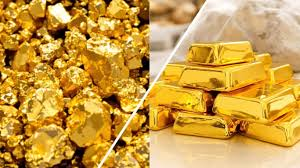
Raw gold and refined gold represent two distinct stages in the gold value chain, and understanding this distinction is essential for investors, miners, and buyers. Raw gold refers to gold in its natural, unprocessed state, often mixed with other minerals, impurities, and varying purity levels. Refined gold, on the other hand, is processed through advanced smelting and purification techniques to achieve high purity levels, typically 99.5% to 99.99% (24K).
The valuation gap between the two is significant. Raw gold is priced lower due to its uncertainty in purity, additional refining costs, and logistical risks. Refined gold commands a premium because it is standardized, certified, and easier to trade globally. Certification and assay reports play a critical role in building trust and determining final market value.
Africa remains one of the world’s largest sources of raw gold, supplying major global markets. However, much of this gold is refined in international hubs such as Dubai, Switzerland, and South Africa, where advanced refining facilities ensure purity standards meet global trading requirements. For anyone involved in gold trading, understanding this transformation from raw to refined is key to avoiding mispricing and making informed investment decisions.
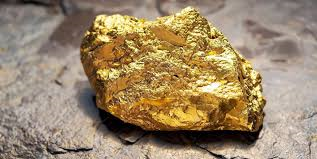
What is Raw Gold? Definition, Forms, and Market Reality
Raw gold refers to gold in its natural, unprocessed state, exactly as it is extracted from the earth before any refining or industrial purification. Unlike refined gold (such as 24K bars or certified bullion), raw gold has not been standardized for purity, weight accuracy, or commercial investment grading. It exists in mixed forms that often contain impurities like silver, copper, quartz, or other mineral deposits.
In simple terms, raw gold is “mined gold before it becomes investment-grade gold.”
Definition of Raw Gold
Raw gold is naturally occurring gold material that has undergone little to no refining. It typically contains varying purity levels depending on the mining location and extraction method.
It can include:
- Gold mixed with rock or soil
- Partially separated gold dust or flakes
- Natural gold nuggets still containing impurities
- Alluvial gold recovered from rivers or streams
Because it is not standardized, raw gold requires assaying and refining before it can be traded on formal global bullion markets.
Common Forms of Raw Gold
Raw gold appears in several physical forms depending on geology and mining techniques:
- Gold Nuggets
Large, naturally formed pieces of gold found in riverbeds or underground deposits. Nuggets often carry visible impurities and irregular shapes.
- Gold Dust (Fine Gold)
Very small particles of gold are often mixed with sand or sediment. This is common in artisanal and small-scale mining operations across Africa.
- Gold Flakes
Slightly larger than dust but still thin fragments of gold. Flakes are often recovered through panning or sluicing.
- Gold Ore
A rock that contains gold embedded within it. The gold is not visible or easily separated without crushing and chemical processing.
- Alluvial Gold
Gold is found in riverbeds, streams, or floodplains after being naturally eroded from primary deposits.
Market Reality of Raw Gold
In the global gold market, raw gold is considered a high-risk, non-standardized commodity compared to refined bullion.
- Pricing Is Discounted
Raw gold is usually purchased below spot market price because:
- Purity is uncertain until tested
- Refining costs are deducted
- Logistics and risk are higher
- Requires Assay Verification
Before any serious transaction, raw gold must be tested through:
- Fire assay (most accurate)
- XRF testing (quick surface scan)
- Chemical analysis in certified labs
- Not Directly Tradable on Major Exchanges
Unlike refined gold bars (LBMA-standard), raw gold cannot be directly traded on global exchanges. It must first be refined and certified.
- Strong Role in Africa’s Mining Economy
Africa, especially countries like Uganda, DRC, Tanzania, and Ghana, is a major source of raw gold. Much of this gold is exported to refining hubs such as:
- Dubai (UAE)
- Switzerland
- South Africa
- Higher Fraud and Trust Risks
Because raw gold is unstandardized, the market has higher exposure to:
- Impurity disputes
- Fake gold mixing
- Weight manipulation
- Documentation gaps
This is why professional buyers rely heavily on trusted suppliers, chain-of-custody documentation, and verified assayers.
What is 1 g of raw gold worth?
The spot price of pure gold is approximately $146.15 USD per gram.
However, if you are holding raw gold (such as gold flakes, nuggets, or dust straight from the ground), calculating its actual value is a bit more nuanced. Raw gold is virtually never 100% pure.
The actual payout for 1 gram of raw gold depends on a few specific factors:
- Purity (The Karat Weight)
Naturally occurring raw gold usually ranges between 70% and 95% purity (17 to 22 karats). It is commonly mixed with other minerals like silver, copper, or iron.
- If your 1 gram of raw gold is 85% pure (typical for many natural nuggets), it contains roughly 0.85 grams of pure gold.
- This drops its base metal value to about $124.23 USD.
- Market Rates vs. Refinery Payouts
If you sell raw gold to a refinery or a gold buyer, they will not pay you the full spot price. They have to factor in the cost of melting, assaying (testing), and refining it.
- Expect a buyer to offer anywhere from 70% to 90% of the melt value, depending on how clean the gold is.
The “Nugget” Exception
There is one major exception to the rule: large or uniquely shaped gold nuggets.
Because large, intact nuggets are rare and highly sought after by collectors, they often sell for more than the spot price of gold. If you have a beautiful, clean nugget, it could fetch a premium of 10% to 50% (or more) over the current spot value.
Summary Breakdown (Estimated Value per Gram)
| Type of Gold | Estimated Value (USD) |
| Pure Gold (24k Spot Price) | ~$146.15 |
| Average Raw Gold (Melt Value) | ~$110.00 – $138.00 |
| Refiner Payout (What you’d get paid) | ~$85.00 – $120.00 |
| Collectible Nugget | ~$160.00+ |
Why Understanding Raw Gold Matters
Understanding raw gold is essential for investors, traders, and buyers because it directly influences every stage of the transaction, from how the price is negotiated based on uncertain purity, to the cost required for refining it into certified bullion, as well as the legal requirements for export and documentation; it also plays a key role in assessing potential risks such as contamination or fraud, and ultimately determines the final profit margin once the gold has been fully purified and prepared for the formal market.
What is Refined Gold? The Process That Creates Investment-Grade Gold
Refined gold is gold that has been purified and processed from its raw form into a high-purity, standardized product suitable for investment, trade, and industrial use. Unlike raw gold, it has undergone strict refining procedures to remove impurities and meet global quality standards, making it acceptable in formal financial and bullion markets.
Refining Process Explained
The refining process transforms raw gold into investment-grade material through a series of controlled industrial steps.
Smelting and chemical purification
Raw gold is first heated at extremely high temperatures (smelting) to separate metal from rock and other materials. Chemical treatments are then used to dissolve and isolate pure gold from remaining impurities.
Removal of impurities
Unwanted metals such as silver, copper, iron, and other trace elements are carefully removed through advanced refining methods to increase purity.
Conversion into bars, coins, or bullion
Once purified, the gold is cast or minted into standardized forms such as bars, coins, or bullion, which are easier to trade, store, and verify.
Purity Standards of Refined Gold
Refined gold is measured using strict international purity standards that define its quality and value.
24K (99.9%–99.99%)
This is the highest commercial purity level of gold, often referred to as “investment-grade gold,” with almost all impurities removed.
LBMA-certified gold bars
Gold bars approved by the London Bullion Market Association (LBMA) meet global standards for weight, purity, and authenticity, making them widely accepted by banks and institutional investors.
Hallmarking and assay certification
Each refined gold product is tested and stamped with a hallmark or accompanied by an assay certificate confirming its purity and origin.
Refined Gold is Globally Accepted
Refined gold is the foundation of the global gold market because it is standardized, trusted, and easy to trade across borders.
Trusted by banks and governments
Central banks, financial institutions, and governments hold refined gold as a secure reserve asset due to its verified purity and stability.
Easier storage, transport, and resale
Because it comes in uniform bars or coins with certified weight and purity, refined gold is simple to store, move internationally, and resell without re-testing.
Standard pricing linked to global spot markets
Refined gold is directly priced based on global spot rates, ensuring transparent valuation and making it the benchmark for all gold trading worldwide.
Raw Gold vs Refined Gold: Key Differences Investors Must Know
Raw gold and refined gold differ significantly in purity, pricing, market access, and risk level. Understanding these differences helps investors avoid losses and choose the right form of gold for trading or investment.
Purity and Composition Differences
Raw gold has inconsistent and unverified purity, often mixed with other minerals and impurities depending on its natural source. In contrast, refined gold is scientifically purified and standardized, typically reaching 99.9%–99.99% purity with official certification.
Pricing Structure Differences
Raw gold is usually sold at a discounted price (around 60–90% of the global spot price) because it still requires testing and refining. Refined gold, however, is priced at the full international market value, as its purity and weight are already guaranteed.
Liquidity and Market Access
Raw gold has limited market access and fewer buyers, often restricted to specialized traders or refiners. Refined gold has high global liquidity, meaning it can be easily bought, sold, and traded across international markets, banks, and exchanges.
Risk Profile Comparison
Raw gold carries a higher risk level, including fraud, contamination, and disputes over purity after testing. Refined gold has a low counterparty risk because it is certified, verified, and accepted by regulated financial institutions.
Summary Table: Raw Gold vs Refined Gold
| Factor | Raw Gold | Refined Gold |
| Purity | Inconsistent, unverified | 99.9%–99.99%, certified |
| Pricing | 60–90% of spot price (discounted) | Full global spot market value |
| Market Access | Limited buyers, niche trading | Global acceptance and liquidity |
| Risk Level | High risk (fraud, assay disputes) | Low risk (certified, verified) |
| Form | Nuggets, dust, ore | Bars, coins, bullion |
How Raw Gold is Valued in the Market
Raw gold does not have a fixed global price like refined gold. Instead, its value is determined through testing, negotiation, and risk adjustments based on purity, condition, and trust between buyer and seller.
Assay Testing and Weight Measurement
Raw gold is first evaluated through scientific testing methods to determine its actual purity and true gold content. Common methods include fire assay, which is the most accurate laboratory process, and XRF testing, which provides quick surface-level results. Alongside purity testing, the gold is carefully weighed to calculate its total value, making assay confirmation essential before any serious pricing or purchase decision.
Discount Factors Applied to Raw Gold
The final price of raw gold is reduced from the global spot price based on several risk and quality factors. Higher impurity levels lead to greater discounts because more refining is required. Transport and handling risk also reduce the value due to security and logistics concerns. In addition, the credibility of the seller plays a major role, as unverified or unknown sources often receive lower offers compared to trusted and well-documented suppliers.
Negotiation-Based Pricing System
Unlike refined gold, raw gold operates under a negotiation-driven pricing system rather than a fixed global rate. Each transaction is individually agreed upon between buyer and seller after considering assay results, risk factors, and market demand. This makes raw gold pricing highly flexible, meaning the final value can vary significantly depending on buyer confidence and deal structure.
How Refined Gold is Valued
Refined gold is valued using a transparent and standardized system tied directly to global financial markets. Its pricing is more stable and predictable compared to raw gold because purity, weight, and authenticity are already certified.
Global Spot Price Benchmark
The value of refined gold is primarily based on the international gold spot price, which is set by major global markets such as COMEX and the London Bullion Market Association (LBMA). This benchmark reflects real-time global supply and demand, meaning refined gold is priced consistently across countries with minimal variation.
Premiums and Fees
Although refined gold follows the global spot price, buyers often pay a small additional cost known as a premium. This premium typically ranges from 1% to 5% and covers dealer margins, logistics, minting, and distribution costs. Unlike raw gold, refining costs are already absorbed into the final product, making pricing more transparent and easier to calculate.
Certification Impact on Value
Certification significantly increases the value and trust level of refined gold. LBMA-certified gold bars are especially valuable because they meet strict international standards for purity, weight accuracy, and origin verification. This certification enhances liquidity, meaning the gold can be easily sold or traded anywhere in the world without re-testing or disputes.
What is Refined Gold? The Hallmarking of 99.9% Pure Bullion
Refined gold is gold that has been processed and purified to remove almost all impurities, resulting in investment-grade bullion typically reaching 99.9% (24K) or higher purity. It is the form of gold that is officially recognized and traded in global financial markets because its weight, purity, and authenticity are verified and standardized.
The term “hallmarking” refers to the official stamping or certification process that confirms this purity level, ensuring the gold meets strict international standards for trade, investment, and storage.
The Hallmarking and Refining Process
Refined gold becomes “hallmarked bullion” after undergoing strict industrial purification and certification procedures.
Smelting and purification
Raw material is heated at extremely high temperatures to separate gold from surrounding minerals and metals. Chemical processes are then used to further refine the gold to achieve near-total purity.
Testing and verification
After refining, the gold is tested using laboratory methods such as fire assay to confirm its exact purity level, ensuring it meets the required standard (usually 99.9% or higher).
Hallmarking and certification
Once verified, the gold is stamped with a hallmark or issued a certificate that includes details such as purity, weight, refinery name, and serial number. This makes the gold fully traceable and globally accepted.
Why 99.9% Pure Bullion Matters
Gold refined to 99.9% purity is considered investment-grade bullion, meaning it is suitable for banks, institutional investors, and international trade.
It is important because it provides:
- Guaranteed purity and authenticity
- Standardized value based on global spot prices
- Easy resale and global acceptance
- High liquidity in financial markets
The Market Importance of Hallmarked Gold
Hallmarked refined gold is the foundation of the global gold system. It removes uncertainty in trading by ensuring every bar or coin meets strict quality standards. This trust allows it to be used by central banks, investors, and bullion dealers worldwide without the need for re-testing or renegotiation.
Valuation and Pricing Mechanics: Why Raw Gold Costs Less
Raw gold trades below the international spot price because it is not yet refined, certified, or standardized. Buyers must account for purification costs, testing risks, and processing losses before it can become investment-grade bullion. This creates a natural “refiner’s discount” compared to refined gold.
The Spot Price of Gold vs. The Refiner’s Discount
The global spot price (quoted on platforms like Kitco, LBMA, or COMEX) reflects the value of pure, investment-grade gold, not raw material. Raw gold cannot be sold at this price because it still contains impurities and requires industrial processing.
Buyers, therefore, apply a refiner’s discount to cover:
- Refining and purification costs
- Weight loss during melting and separation
- Assay and verification expenses
- Transportation and security risks
- Uncertainty in actual purity
As a result, raw gold is typically purchased at a percentage below spot value, depending on its quality and trust level.
## Understanding the Assay Process: Determining Fire Assay vs. XRF Purity
The value of raw gold is determined through assay testing, which measures its actual gold content before pricing is finalized.
Two main methods are used:
- X-Ray Fluorescence (XRF): A fast, non-destructive surface test that provides an approximate purity reading.
- Fire Assay: A destructive laboratory process considered the most accurate method for determining true gold content.
Once purity is confirmed, buyers calculate the payable value based on weight and gold content, then subtract refining costs and fees.
Valuation Formula
[
\text{Net Value} = (\text{Total Weight} \times \text{Purity Percentage}) – \text{Refining Fees}
]
Pricing Calculation Example Table
| Step | Description | Impact on Value |
| Total Weight | Measured raw gold weight | Base quantity |
| Purity % (Assay Result) | Determines actual gold content | Adjusts payable gold |
| Spot Price Reference | Global benchmark price | Sets the theoretical maximum value |
| Refining Fees | Cost to purify gold | Deducted from total |
| Final Net Value | Payable amount to the seller | Agreed transaction price |
This structure explains why raw gold consistently trades below spot price: its value is not fixed by markets, but calculated through measurable purity, processing costs, and negotiated risk adjustments.
## Identifying Common Raw Gold Scams and Counterfeits (Copper and Brass Alloys)
Raw gold transactions carry significant risk because the material is unstandardized, and visually similar metals can be easily disguised as genuine gold. Fraud typically occurs through mixing, coating, or fully replacing gold with cheaper metals, especially when deals are based on trust rather than verified testing.
One of the most common scams is “salted gold,” where genuine gold parcels are intentionally mixed with non-gold materials to inflate weight or mislead buyers about consistency. Another frequent issue involves synthetic or artificially prepared gold dust, which may contain traces of real gold but is heavily diluted with sand, soil, or industrial metal powders.
In more advanced fraud cases, sellers may use copper or brass alloys shaped or coated to resemble natural nuggets. These materials can pass visual inspection but fail proper assay testing once melted or chemically analyzed. Similarly, some counterfeit bars are engineered with tungsten cores, then plated with a thin layer of gold to mimic correct density and appearance.
Because of these risks, professional buyers rely on strict verification methods such as fire assay testing, XRF screening, and controlled chain-of-custody handling before confirming any payment.
## Supply Chain Due Diligence: AML, KYC, and Responsible Sourcing Regulations
The movement of gold across borders is heavily regulated, and compliance requirements become stricter when dealing with raw gold compared to refined bullion. Governments and financial regulators enforce Anti-Money Laundering (AML) rules, Know Your Customer (KYC) procedures, and responsible sourcing standards to prevent illicit trade, tax evasion, and conflict-linked gold entering the formal market.
Under AML and KYC frameworks, buyers and dealers must verify the identity of all parties involved in a transaction, document the origin of the gold, and maintain a clear record of ownership and transfer. This includes contracts, export permits, assay certificates, and shipping documentation. Without this traceability, transactions are often flagged as high risk or blocked entirely by financial institutions.
The OECD Due Diligence Guidelines for Responsible Supply Chains of Minerals further require companies to assess and mitigate risks related to conflict financing, illegal mining, and human rights violations. These standards are especially important in raw gold sourcing regions, where artisanal mining is common, and documentation may be limited or inconsistent.
In practice, refined gold is significantly easier to transport and trade legally because it is already processed, certified, and registered through accredited refineries (often LBMA-approved). Each bar typically carries a serial number, purity stamp, and refinery documentation, making it fully traceable and widely accepted by banks, customs authorities, and international traders.
By contrast, raw gold (including doré bars and unrefined nuggets) faces stricter scrutiny at borders due to uncertainty in origin, purity, and compliance documentation. It often requires additional permits, higher-level inspections, and more complex export approvals, increasing both cost and processing time for cross-border movement.
## Is Raw Gold Worth More Than Refined Gold?
Raw gold is not usually worth more than refined gold because it contains impurities such as silver, copper, quartz, sand, or other minerals mixed with the gold. The value of raw gold depends on its purity, weight, and how much recoverable gold can be extracted after refining. Refined gold, especially 24K gold with certified purity, normally sells at a higher market price because it is cleaner, standardized, and easier to trade internationally. However, rare natural gold nuggets with unique shapes or collector value can sometimes sell for more than standard refined gold due to their rarity and appearance.
## How Can I Identify Raw Gold?
Raw gold can often be identified by its natural yellow metallic color, heavy weight, and resistance to rust or tarnishing. Unlike fake gold or pyrite (“fool’s gold”), real raw gold does not sparkle excessively and usually has a smooth, soft metallic texture. It is commonly found mixed with quartz rock or in river sediments. Real gold is also non-magnetic, meaning it will not stick to a magnet, and it remains yellow even when scratched. Professional identification is usually done through acid testing, density testing, XRF analysis, or laboratory assay certification to confirm purity and authenticity.
## Raw Gold for Sale
Raw gold for sale refers to natural gold materials that are sold before they go through full industrial refining. This gold is usually mined directly from rivers, underground deposits, or open-pit mining areas and may appear as gold nuggets, gold dust, flakes, or doré bars. Unlike refined 24K gold, raw gold still contains natural impurities such as silver, copper, quartz, iron, or other minerals. The value of raw gold depends on its purity, weight, origin, and market demand. Buyers normally require laboratory testing or assay reports to confirm authenticity before completing a transaction. Raw gold is commonly traded in major African gold-producing countries such as Uganda, Ghana, Tanzania, Mali, Congo, and South Africa.
## Buy Raw Gold, Africa
Buying raw gold in Africa involves purchasing unrefined gold directly from mining regions, licensed dealers, exporters, or mining cooperatives. Africa is one of the world’s leading gold-producing regions, making it an important source for international gold investors, refineries, jewelry manufacturers, and bullion traders. Countries such as Ghana, South Africa, Mali, Tanzania, and Uganda are known for producing significant amounts of natural gold.
When buying raw gold in Africa, buyers should verify:
- Mining licenses and export permits
- Company registration documents
- Gold purity and assay certificates
- Chain-of-custody records
- Compliance with anti-money laundering (AML) regulations
Professional due diligence is important because the raw gold market can involve risks such as fraud, underweight shipments, fake assay reports, or illegal mining operations. Most international buyers prefer working with licensed exporters and verified gold suppliers.
## Raw Gold Supplier
A raw gold supplier is an individual, mining company, cooperative, or licensed exporter that sells unrefined gold products to local and international buyers. These suppliers may source gold directly from artisanal miners, industrial mining operations, or regional gold trading centers. Raw gold suppliers play an important role in the global gold supply chain because they connect mining regions with refineries, bullion markets, jewelry industries, and investment buyers.
Reliable raw gold suppliers usually provide:
- Export documentation
- Government-issued mining or trading licenses
- Assay certificates showing gold purity
- Secure shipping arrangements
- Compliance with international gold trading laws
Trusted suppliers also follow responsible sourcing practices to ensure the gold is legally mined and ethically traded. International buyers often conduct background checks and third-party inspections before purchasing gold from a supplier.
## Raw Gold in Bulk
Raw gold in bulk refers to large-scale gold transactions involving significant quantities of unrefined gold, such as gold dust, nuggets, concentrates, or doré bars. Bulk gold transactions are commonly conducted between mining companies, refineries, institutional investors, bullion dealers, and international gold trading firms.
Bulk gold purchases usually require:
- Formal contracts and purchase agreements
- Assay verification from independent laboratories
- Export approvals and customs documentation
- Secure logistics and insured transportation
- Payment procedures compliant with international banking laws
The pricing of bulk raw gold is generally based on:
- International spot gold prices
- Gold purity percentage
- Refining costs
- Transportation and insurance expenses
- Government taxes and export fees
Because of the high value involved, bulk gold trading requires strong legal compliance and extensive due diligence to reduce financial and operational risks.
## Unrefined Gold for Sale
Unrefined gold for sale refers to natural gold that has not yet undergone complete purification through industrial refining processes. This type of gold may still contain other metals and minerals, which means its purity can vary widely depending on the mining source. Unrefined gold is commonly sold in the form of nuggets, dust, flakes, concentrates, or partially refined doré bars.
The price of unrefined gold is usually lower than refined bullion because buyers must pay additional costs for:
- Laboratory testing
- Smelting and refining
- Transportation
- Certification
- Export compliance
Many investors and refineries buy unrefined gold because it can be refined into high-purity bullion for resale or manufacturing. However, buyers should always confirm authenticity through professional testing methods such as:
- Fire assay testing
- XRF analysis
- Density testing
- Acid testing
Understanding the legal and commercial aspects of unrefined gold trading is essential for safe and compliant international transactions.
## Secure Your Gold Sourcing with GoldPricesInAfrica
GoldPricesInAfrica helps investors, gold traders, jewelers, and international buyers connect with trusted gold sourcing opportunities across Africa. The platform provides market insights, gold price updates, industry information, and guidance on responsible gold trading practices in major gold-producing countries such as Uganda, Ghana, Tanzania, Mali, and South Africa.
Whether you are looking for raw gold, refined gold bars, gold nuggets, or wholesale gold supply information, working with verified and compliant suppliers is essential for reducing transaction risks and ensuring legal compliance. GoldPricesInAfrica focuses on transparency, market awareness, and safe gold trade education to help buyers make informed decisions.
Why Professional Gold Sourcing Matters
- Reduces the risk of fraud and fake gold transactions
- Supports compliance with export and import regulations
- Helps verify gold purity and supplier legitimacy
- Improves transaction security and documentation
- Ensures better understanding of pricing and market trends
Important Areas Buyers Should Verify
- Assay and purity certificates
- Export licenses and permits
- Supplier registration documents
- Responsible sourcing practices
- Secure logistics and insured transportation
Explore Gold Market Opportunities Across Africa
GoldPricesInAfrica provides valuable information on:
- Live gold prices in African countries
- Gold investment insights
- Gold buying and export guides
- Market trends and analysis
- Gold mining and trading updates
By focusing on transparency and due diligence, buyers and investors can participate more safely in the African gold market while building long-term business relationships with compliant suppliers and industry professionals.
## Raw Gold vs Refined Gold FAQ — Frequently Asked Questions
What is the difference between raw gold and refined gold?
Raw gold is natural gold that still contains impurities such as silver, copper, quartz, or other minerals after mining. Refined gold has gone through industrial purification processes to remove impurities and increase purity, often reaching 99.9% or 24K purity.
Is raw gold worth more than refined gold?
In most cases, refined gold is worth more because it has verified purity and is easier to trade internationally. Raw gold is usually sold at a discount due to refining and testing costs. However, rare natural gold nuggets can sometimes have higher collector value.
How can I identify raw gold?
Raw gold can be identified by its natural yellow color, heavy weight, non-magnetic properties, and soft metallic texture. Unlike fake gold or pyrite, real gold does not tarnish easily and remains yellow when scratched. Professional testing is recommended for accurate verification.
Why is refined gold more expensive?
Refined gold is more expensive because it has higher purity, standardized quality, international certification, and better market liquidity. Refining also involves additional processing, testing, and compliance costs.
What forms does raw gold come in?
Raw gold commonly appears as:
- Gold nuggets
- Gold dust
- Gold flakes
- Gold ore
- Doré bars
- Alluvial gold from rivers and mining sites
What is refined gold used for?
Refined gold is widely used in:
- Investment bullion and gold bars
- Jewelry manufacturing
- Central bank reserves
- Electronics and technology
- Medical and industrial applications
Is raw gold legal to buy and sell?
Yes, raw gold can be legally traded when buyers and sellers comply with local mining laws, export regulations, tax requirements, and anti-money laundering (AML) rules. Buyers should work with licensed suppliers and verified exporters.
How is raw gold refined?
Raw gold is refined through processes such as smelting, chemical purification, electrolysis, or fire refining. These methods remove impurities and increase gold purity to international bullion standards.
Can raw gold be fake?
Yes. Some fake products resemble raw gold, including pyrite (“fool’s gold”) or gold-plated materials. Buyers should use professional testing methods such as XRF analysis, acid testing, or fire assays to verify authenticity.
Which is better for investment: raw gold or refined gold?
Refined gold is generally considered safer for investment because it has certified purity, easier resale value, and international recognition. Raw gold may offer opportunities for traders and refiners but carries higher risks related to purity verification and legal compliance.
Does raw gold have impurities?
Yes. Raw gold naturally contains other minerals and metals, including silver, copper, iron, quartz, and sand. The amount of impurities affects the gold’s value and refining costs.
What purity is refined gold?
Refined gold is commonly available in:
- 99.9% purity (24K)
- 99.5% purity bullion
- 22K and 18K gold for jewelry applications
Why do investors prefer refined gold?
Investors prefer refined gold because it is:
- Easier to value
- Globally recognized
- Certified by refineries
- More liquid in international markets
- Safer for storage and resale
Which countries produce the most raw gold in Africa?
Major African raw gold producers include:
- Ghana
- South Africa
- Mali
- Tanzania
- Uganda
- Democratic Republic of Congo (DRC)
- Sudan
How is the price of raw gold determined?
The price of raw gold depends on:
- International spot gold prices
- Purity level
- Weight
- Refining costs
- Market demand
- Transportation and export expenses