10 Best Gold Refineries in Uganda | 2026 Price Guide
Uganda has rapidly emerged as one of East Africa’s leading gold refining destinations, supported by significant investments in modern processing facilities, stronger regulatory oversight, and rising international demand for responsibly sourced gold. The country’s transition from exporting mainly raw gold to refining and exporting value-added bullion has strengthened its position in the global precious metals market.
This transformation became particularly evident in 2023 when Uganda’s gold exports increased from approximately $201 million in 2022 to over $2.3 billion, driven by expanded refining capacity and the commissioning of major facilities such as the Chinese-backed Wagagai Gold Refinery. Today, licensed operators including African Gold Refinery (AGR), Niton Refinery, GAZHAS, Afriswiss, Oasis Refinery, Kenexa Refinery, and Glossy Africa provide services ranging from assaying and smelting to bullion production, vault storage, and international export support.
Uganda’s credibility as a refining jurisdiction was further reinforced in April 2026, when Euro Gold and Feldstein were selected by the Bank of Uganda, demonstrating growing government confidence in the country’s refining and compliance framework. As a result, Uganda is increasingly viewed as a trusted regional hub for certified gold processing, investment, and international trade.
Why Uganda Is Becoming East Africa’s Gold Refining Capital
Several factors have accelerated Uganda’s rise as a regional gold-processing center:
| Growth Driver | Impact on the Industry |
| Modern Refining Facilities | Increased local value addition and higher export revenues |
| Strategic Location | Easy access to gold-producing countries such as DRC, Tanzania, South Sudan, and Kenya |
| Government Regulation | Improved licensing, monitoring, and compliance standards |
| Foreign Investment | New refinery projects and technology transfer |
| Export Infrastructure | Faster logistics and international market access |
| Growing Global Demand | Increased demand for traceable and responsibly sourced gold |
The combination of these advantages has enabled Uganda to attract investors, international buyers, and refinery operators seeking a secure gateway into Africa’s growing gold sector.
Uganda’s Role in Regional Gold Trade
Uganda serves as a key refining and trading gateway for gold originating from across East and Central Africa. Gold from neighboring countries is often transported to Uganda for testing, refining, certification, and export to major global markets, including:
- United Arab Emirates (Dubai)
- Switzerland
- India
- China
- Turkey
- Singapore
This regional role has created opportunities for licensed refiners, logistics providers, exporters, and international bullion investors operating within Uganda’s precious metals sector.
Industry Outlook for 2026 and Beyond
Industry analysts expect Uganda’s refining sector to continue expanding due to:
- Increased refinery investments
- Stronger compliance and traceability requirements
- Growing demand for LBMA-standard gold products
- Greater participation by financial institutions
- Enhanced oversight from the Bank of Uganda and relevant regulatory authorities
As refining capacity grows, Uganda is expected to strengthen its position as one of Africa’s most important gold-processing and export centers.
| Refinery Name | Location | Primary Purity | 2026 Status / Verification | |
| 1 | Euro Gold Refinery (U) Ltd | Kampala | 99.9% (24K) | Top Choice: Licensed partner of the Bank of Uganda (2026 contract). |
| 2 | Feldstein Trading Ltd | Kampala | 99.9% | Official Partner: Contracted by the central bank for domestic gold purchase. |
| 3 | African Gold Refinery (AGR) | Entebbe | 99.9% | Largest facility in the region; high-volume export capacity. |
| 4 | Simba Gold Refinery | Kampala | 99.9% | Long-standing licensed dealer; specialized in smelting and assaying. |
| 5 | Bullion Refinery Ltd | Kampala | 99.9% | Active license for 2026; major industrial exporter. |
| 6 | Gemstone Refinery | Kampala | 99.9% | ISO 9001 certified; known for responsible gold guidance compliance. |
| 7 | Polaris Gold Refinery | Kampala | 24K / 22K | Active 2026 Mineral Dealer License (MDL20260635). |
| 8 | Maxmetal Refinery Limited | Kampala | 24K | Verified active license; specialized in industrial refining. |
| 9 | NRS Logistics (U) Ltd | Kampala | 24K / 22K | Premier certified dealer; focused on secure transport and refining. |
| 10 | Metal Testing & Smelting | Kampala | 18K – 24K | High shipment volume; expert in purity testing and certification. |
NOTE. Verified 2026 List via MEMD
How to Choose the Right Gold Refinery in Uganda – 7-Point Checklist
Selecting the right gold refinery is one of the most important decisions for miners, traders, investors, and exporters. A reputable refinery can help maximize the value of your gold, ensure legal compliance, and provide the documentation required for international trade. Use the following checklist before committing to any refinery.
1. Verify Licensing and Regulatory Compliance
Always confirm that the refinery is properly licensed and operates in accordance with Uganda’s mining and precious metals regulations. Licensed refineries are generally subject to government oversight and are more likely to follow recognized industry standards.
Why it matters:
Working with a licensed refinery helps reduce legal risks, improves transaction transparency, and increase confidence among international buyers.
2. Check Assaying and Purity Testing Capabilities
Accurate purity testing is essential because it directly affects the value of your gold. Choose a refinery with modern assay laboratories and experienced technicians who can provide reliable results.
Why it matters:
Precise assaying ensures you receive fair value and helps prevent disputes regarding gold purity.
3. Compare Refining Capacity and Turnaround Time
Some refineries can process large quantities of gold quickly, while others may have longer waiting periods. Ask about average processing times and daily refining capacity.
Why it matters:
Faster turnaround times can improve cash flow and reduce delays, especially for exporters working with shipment deadlines.
4. Review Fees and Pricing Transparency
Request a detailed breakdown of all costs, including assay fees, refining charges, storage fees, certification costs, and any additional administrative expenses.
Why it matters:
Transparent pricing allows you to compare service providers accurately and avoid unexpected charges.
5. Evaluate Security and Storage Services
Gold is a high-value asset, so security should be a top priority. Look for refineries that offer secure handling procedures, monitored facilities, vault storage, and insurance options where applicable.
Why it matters:
Strong security measures help protect your gold during testing, refining, storage, and shipment.
6. Assess Export and Documentation Support
If you plan to sell gold internationally, choose a refinery that can assist with export documentation, certificates, customs requirements, and logistics coordination.
Why it matters:
Proper documentation can streamline international transactions and help buyers verify the authenticity and origin of the gold.
7. Research Reputation and Industry Experience
Review the refinery’s track record, years of operation, industry partnerships, and client feedback. Established refineries with strong reputations are often better equipped to handle complex transactions and maintain consistent service standards.
Why it matters:
A refinery’s reputation can influence buyer confidence and reduce operational risks.
Quick Refinery Selection Checklist
| Checklist Item | Why It Matters |
| Valid License and Regulatory Compliance | Helps ensure legal operations |
| Reliable Assay Laboratory | Supports accurate purity testing |
| Adequate Refining Capacity | Reduces processing delays |
| Transparent Fee Structure | Prevents unexpected costs |
| Strong Security Measures | Protects valuable assets |
| Export Documentation Support | Facilitates international trade |
| Proven Industry Reputation | Builds trust and reliability |
Note: Before sending any gold to a refinery, request a written service agreement outlining fees, processing timelines, testing procedures, and responsibilities. Taking time to evaluate these seven factors can help you choose a refinery that aligns with your business goals and supports secure, compliant, and efficient gold transactions.
Factors to Consider When Choosing a Gold Refinery in Uganda
When choosing a gold refinery in Uganda, consider these five crucial factors to ensure you’re working with a credible, efficient, and compliant partner.
- Licensing & Regulatory Compliance
- Ensure the refinery has mineral smelting/refining licenses and necessary dealer or goldsmith licenses, as mandated under Uganda’s Mining & Minerals Act 2022 and the National Standards Act.
- Licensed refineries should demonstrate compliance with export purity standards (≥99.9%), ICGLR regulations, and evidence of duty/tax payments (e.g., USD 200/kg export levy).
- Purity Standards & Assay Accuracy
- Reputable refineries use fire assay, XRF, ICP, and potentiometric methods for precise purity testing, often including umpire assays to ensure consistent results.
- Ask for documented assay reports with splitting limits (e.g., ±0.05% Au) to reduce disputes and verify actual gold content. Gold Refineries in Uganda
- Refining Techniques & Technology
- The best refineries employ multi-stage refining: induction furnace smelting, aqua regia or Miller chloride refining, and possibly electrolysis, followed by final casting, and achieve purities of 99.95–99.99%.
- Facilities like AGR, Kenexa, Oasis, and GAZHAS use modern tech such as electric induction, advanced chemical refining, and multi-metal recovery (PGMs included).
- Transparency & Reputation
- Look for refineries with open processes, public facility tours, and customer education programs, like Euro Gold Refinery does, to build trust.
- Check for ISO certification (ISO 9001 or 14001), positive client reviews, and anti-fraud measures.
- Be aware of anecdotal warnings: Reddit users note that scams and non-reputable middlemen are common in Kampala’s gold trade, so vet the refinery’s credibility carefully.
- Value-Added Services & Logistics
- Choose a refinery offering full-service capabilities: assaying, smelting, chemical refining, casting, secure packaging, and bonded storage/export support.
- Services like logistics, vault services, export documentation, financing, and consulting are added advantages, seen at facilities like Niton, Global Gold, and Oasis.
Why These Refineries Stand Out
- They are among the six officially recognized, refining to 99.99%, per Uganda’s Ministry of Energy & Minerals.
- They offer modern technology and professional processes, from fire assay to aqua regia, ensuring traceable, pure output.
- Many support end-to-end supply chain services: assaying, bullion casting, logistics, export documentation, and quality control.
An overview of the capacity and output of Uganda’s gold refineries in 2026
National Overview
- As of 2021, Uganda operates six gold refineries that process dore into 99.99% purity bullion, per statements by Energy Minister Ruth Nankabirwa.
- The government has targeted increasing refined gold export value from USD 450 million to USD 787 million under National Development Plan.
- 2. Refinery Profiles & Capacity
Wagagai Gold Plant (Busia)
- Chinese-owned facility starting operations in March 2024, located in Alupe, Busia District.
- Designed with a processing capacity of 5 tons of gold ore per day, producing 99.99% purity bullion.
- With an estimated US $200 million investment, this is one of the largest high-capacity refineries in East Africa.
African Gold Refinery
- Among storied “Big Six” gold refineries recognized by the government.
- Credited with catalyzing Uganda’s gold export boom in 2020, playing a pivotal role in refined export volumes nearing 40 tones.
Simba Gold Refinery & Bullion Gold Refinery
- Also included in the six major refineries refining to 99.99% purity, although specific capacities are not publicly disclosed.
- Supported Uganda’s rise to becoming the leading African gold exporter in 2020, generating over USD 1.8 billion in revenue.
Other Refineries (Kenexa, Oasis, etc.)
- Included among licensed refineries operating in Kampala and Entebbe region. While their exact daily throughput isn’t specified, they provide full-scale refining, assaying, and topline bullion services up to 99.99% purity.
- Aggregate & Projected Capacity
- Wagagai’s 5 t/day capacity implies approximately 1,500 t/year of ore processing, translating to 15 t/year of gold, presuming a 1% gold grade.
- The combined output of all six refineries in 2020 approached 40 t of refined gold, representing a significant leap in Uganda’s export dynamics.
- With recent capacity expansions, formalization, and new investments, Uganda’s refining infrastructure may now exceed 50 t/year in refined gold output.
- Economic Output & Export Value
- Gold climbed to Uganda’s top foreign-exchange earner in 2020, with revenues reaching USD 1.819 billion, surpassing coffee and tourism.
- Targeted export value for refined gold is planned to reach USD 787 million annually, based on development plans.
- Recent government tax reforms (e.g., export levies of USD 200/kg) have influenced market trends and may impact refinery utilization.
Gold Buyers vs. Gold Refineries in Uganda: Which One Should You Choose?
Many gold sellers, miners, and investors are unsure whether they should sell directly to a gold buyer or work with a gold refinery. The right choice depends on the quantity of gold, the level of processing required, and whether certification or export services are needed.
Comparison Table: Gold Buyers vs. Gold Refineries in Uganda
| Feature | Gold Buyers | Gold Refineries |
|---|---|---|
| Primary Role | Purchase gold from miners, traders, and investors | Process and refine raw gold into high-purity bullion |
| Best For | Individuals and small-scale sellers seeking quick transactions | Large-scale traders, exporters, mining companies, and investors |
| Gold Accepted | Gold dust, nuggets, scrap gold, jewelry, and bars | Primarily raw gold, dore bars, concentrates, and bulk quantities |
| Purity Testing | Basic testing and valuation | Advanced laboratory assaying and certification |
| Refining Services | Usually not available | Full refining to 99.5%–99.99% purity |
| Payment Speed | Often same day or within a few days | May take several days depending on refining requirements |
| Export Support | Limited | Comprehensive export documentation and logistics support |
| International Certification | Rarely provided | Often provides assay certificates and export documentation |
| Transaction Size | Small to medium volumes | Medium to large commercial volumes |
| Pricing Basis | Based on estimated purity and market rates | Based on final refined purity and international bullion prices |
| Storage Services | Generally unavailable | Some refineries offer secure vault storage |
| Regulatory Compliance | Depends on buyer licensing status | Typically subject to stricter regulatory oversight |
When to Choose a Gold Buyer
A licensed gold buyer may be the better option if you:
- Need immediate payment.
- Have a small quantity of gold to sell.
- Are selling gold jewelry, nuggets, or gold dust.
- Do not require refining or export services.
- Want a straightforward local transaction.
When to Choose a Gold Refinery
A gold refinery may be the better option if you:
- Need professional assaying and purity verification.
- Want gold refined to international standards (99.99% purity).
- Plan to export gold internationally.
- Require certificates, documentation, and compliance support.
- Are handling commercial or investment-grade quantities.
Quick Decision Guide
| Your Goal | Recommended Option |
|---|---|
| Sell gold quickly for cash | Gold Buyer |
| Obtain an official purity certificate | Gold Refinery |
| Refine gold to investment-grade bullion | Gold Refinery |
| Sell small quantities of gold dust or nuggets | Gold Buyer |
| Export gold internationally | Gold Refinery |
| Convert dore bars into 24K bullion | Gold Refinery |
| Get immediate market valuation | Gold Buyer |
Tip: Always verify that the buyer or refinery is properly licensed and complies with Uganda’s mining and precious metals regulations before completing any transaction. This helps reduce fraud risks and ensures legal compliance.
How to Export Gold from Uganda & Legal Steps (2026 Guide)
Exporting gold from Uganda is a highly regulated process that requires compliance with government laws, proper documentation, and working only with licensed refineries and exporters. Uganda has strengthened its mining and export framework in recent years to ensure transparency, traceability, and alignment with international trade standards.
The entire process is overseen by the Ministry of Energy and Mineral Development (MEMD), which regulates mining, refining, and export licensing in the country. In addition, other government bodies such as customs authorities and financial regulators ensure that all gold exports meet legal, tax, and anti-money laundering requirements before leaving the country.
Legal Steps to Export Gold from Uganda
Exporting gold from Uganda involves a structured legal process that must be followed carefully to avoid delays or penalties.
First, the exporter must obtain a valid mining or trading license issued under the supervision of the Ministry of Energy and Mineral Development (MEMD). Without this license, it is illegal to trade or export gold commercially.
Second, the gold must be taken to a licensed refinery for assaying and refining, where its purity, weight, and authenticity are verified. The refinery then issues official documents such as a refining certificate, assay report, and bullion certification, which are required for export approval.
Third, the exporter must obtain an export permit from the relevant government authorities, which confirms that the gold has been legally processed and is approved for international shipment. This step also includes customs clearance procedures and verification of taxes or export levies where applicable.
Fourth, all exports must comply with Anti-Money Laundering (AML) regulations, meaning that the source of funds, buyer identity, and transaction records must be fully documented. Banks and financial institutions may also review transactions before approving international payments.
Finally, the gold is securely transported, often through insured logistics or armored export channels, to its destination country. Upon arrival, import regulations in the destination country (such as Japan, UAE, or Switzerland) must also be followed.
Key Compliance Tip for Buyers & Exporters
To ensure smooth export operations, it is strongly recommended to work only with licensed refineries and government-approved exporters. Proper documentation, including invoices, certificates of origin, and refinery reports, is essential for avoiding seizure, delays, or legal complications.
Trusted platforms such as GoldPricesInAfrica.com help international buyers connect with verified Ugandan suppliers, ensuring that gold is sourced, refined, and exported in full compliance with both Ugandan law and international trade standards.
How to Avoid Gold Scams in Kampala (2026 Safety Guide)
| Scam Risk Area | How Scammers Operate | How to Protect Yourself | Safe Practice |
| Fake Gold Dealers | Individuals pose as exporters or miners but have no license or physical office | Always verify business registration with the Ministry of Energy and Mineral Development (MEMD) | Deal only with licensed and traceable companies with a real office address |
| Fake Gold Bars (Plated Metal) | Selling gold-coated metal that looks real but has no actual value | Request purity testing (acid test or XRF machine test) before payment | Test gold at a certified refinery or independent assay center |
| Advance Payment Scams | Seller requests full or partial payment before showing or delivering gold | Never send money without verified documentation and physical inspection | Use escrow or bank-controlled payment methods |
| Fake Export Documents | Fraudsters provide forged export permits or certificates | Cross-check documents with refinery or government authorities | Only accept documents issued by licensed refineries like AGR or Wagagai |
| Street or Hotel Deals | Unofficial sellers offer “cheap gold deals” in informal locations | Avoid all transactions in hotels, streets, or unregistered offices | Meet only at licensed refinery offices or verified bullion dealers |
| Weight Manipulation | Sellers inflate the gold weight using hidden materials or false scales | Always weigh gold using certified digital scales in front of you | Insist on joint weighing at a refinery or trusted dealer |
| Identity Fraud | Fake companies use stolen names or cloned websites | Check company registration, tax ID, and physical location | Verify dealer identity through official government or refinery records |
note
In Kampala, most gold scams happen when buyers prioritize “cheap prices” over legal verification and documentation. Real gold transactions always involve licensed refineries, proper assay reports, and government compliance under MEMD regulations.
For safe sourcing, international buyers are advised to work with verified exporters and trusted platforms such as GoldPricesInAfrica.com, which connect clients to legally compliant gold suppliers in Uganda.
Gold Refining Methods and Standards Used in Uganda
Here’s a comprehensive overview of the gold refining methods and standards used in Uganda, reflecting key techniques and technologies currently in use:
- Aqua Regia Refining (Chemical Method)
- Used by major refineries like Anglo Gold, Kenexa, and East Africa Gold Miners.
- Involves dissolving gold in a mixture of hydrochloric and nitric acids, filtering, then selectively precipitating gold from solution.
- This method is highly efficient, achieving purities of 99.95–99.99%, and is adaptable for processing scrap, dore, or electronic waste.
- Electric Induction Furnace Smelting
- Widely used for melting gold concentrate or dore into bars, as employed by Kenexa, Anglo Gold, and East Africa Gold Miners.
- Induction furnaces offer rapid, uniform heating, melting gold batches from small to large scales into grains or bars.
- This stage often follows aqua regia refining or direct smelting to achieve final alloying and casting.
3. Fire Assay (Sampling & Purity Testing)
- Considered the gold-standard for accuracy, performed by Oasis, Global Gold Refinery, and other licensed labs.
- Involves fusion with flux, cupellation, and weighing to determine gold content to ±0.05% Au precision.
- Enables compliance with both customer contracts and Uganda’s regulatory frameworks under the Ministry of Energy & Minerals.
- Direct Smelting for Artisanal Miners
- Used in small-scale mining communities (e.g., Busia region) as an alternative to mercury amalgamation.
- Involves concentrating ore, then smelting with borax flux in clay burners to produce gold dore.
- Mercury-free, safer, and increasingly promoted by NGOs for environmental health and sustainable livelihoods.
- XRF & Spectrometry (Instrumental Assays)
- X-ray Fluorescence, ICP, Spark, and potentiometric methods are used for rapid, preliminary purity checks.
- While less precise than fire assay, these are critical for batch control before final refining.
- Purity Standards & Regulatory Compliance
- Official refiners like GAZHAS deliver gold at ≥99.95% purity, including trace Platinum Group Metals recovery.
- The top-tier “Big Six” refiners refine to 99.99%, meeting international Good Delivery standards.
- All refineries must comply with Mining & Minerals Act and uphold KYC/AML processes, ensuring full traceability.
Insights & Best Practices
- Multi-stage refining is standard: dore – induction smelting – chemical refining – final fire assay.
- KYC, batch tracking, and compliance ensure Uganda remains a reputable refining hub.
- Community-level tech like direct smelting shows Uganda’s commitment to safer, sustainable mining. Gold Refineries in Uganda
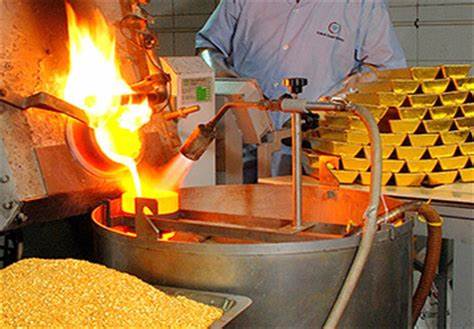
The Ministry of Energy and Mineral Development (MEMD).
Uganda has rapidly positioned itself as one of East Africa’s most important gold refining hubs, supported by major investments in modern infrastructure, strengthened regulation, and increasing global demand for traceable and refined gold. In recent years, the country has shifted from exporting mostly raw gold to building a value-added processing industry, significantly increasing export earnings and improving its standing in the international bullion market.
This transformation became especially visible in 2023, when Uganda’s refined gold exports surged from approximately $201 million in 2022 to around $2.3 billion. This growth was driven by expanded industrial refining capacity, including major facilities such as the Chinese-backed Wagagai plant, alongside established and emerging refineries like African Gold Refinery, Niton Refinery, GAZHAS, Afriswiss, Oasis, Kenexa, and Glossy Africa. These refineries provide essential services, including assaying, smelting, bullion casting, secure vault storage, and export logistics, helping to formalize and professionalize the sector.
A key driver of this growth has been stronger government oversight and regulation. The Ministry of Energy and Mineral Development (MEMD) plays a central role in licensing, monitoring, and regulating mining and refining activities in Uganda, ensuring compliance with national mining laws and international standards for responsible sourcing and export control. This regulatory framework has helped improve transparency, reduce illegal trade risks, and strengthen investor confidence in Uganda’s gold sector.
Further reinforcing the country’s credibility, in April 2026, Euro Gold and Feldstein were officially selected by the Bank of Uganda, reflecting growing institutional support and confidence in the refining ecosystem. This development highlights Uganda’s continued push toward formalization, accountability, and global alignment in the precious metals industry.
Collectively, these factors position Uganda as a rising, regulated, and investment-ready gold refining hub in Africa, capable of supplying certified gold to international markets under strong government supervision and internationally recognized standards.
How Much Does Gold Refining Cost in Uganda?
One of the most common questions from miners, traders, and gold exporters is: “How much does it cost to refine gold in Uganda?” Refining costs vary depending on the refinery, the quantity of gold, the purity level, testing requirements, and whether additional services such as export documentation or secure storage are needed.
Most Ugandan refineries charge either a fixed fee per kilogram, a percentage of the gold’s value, or a combination of refining and assay fees.
Estimated Gold Refining Costs in Uganda
| Service | Typical Cost Range | Notes |
| Assay Testing | $50 – $300 per sample | Depends on the testing method and turnaround time |
| Gold Refining | $100 – $500 per kg | Varies by refinery and purity level |
| Smelting Services | $50 – $200 per kg | Often included in refining packages |
| Purity Certification | $25 – $150 | Certificate issued after testing |
| Bullion Casting | $50 – $250 per bar | Depends on bar size and specifications |
| Secure Vault Storage | $50 – $500 per month | Based on quantity and insurance coverage |
| Export Documentation Support | $100 – $1,000+ | Depends on the destination country and shipment size |
| Customs & Logistics Coordination | Varies | Usually quoted separately |
Estimated Refinery Fee Comparison in Uganda
| Refinery | Estimated Refining Fee* | Assay Services | Bullion Production | Export Support |
| Oasis Refinery | From $100 per kg | Yes | Yes | Yes |
| African Gold Refinery (AGR) | Quotation Required | Yes | Yes | Yes |
| Niton Refinery | Quotation Required | Yes | Yes | Yes |
| Afriswiss Refinery | Quotation Required | Yes | Yes | Yes |
| GAZHAS Refinery | Quotation Required | Yes | Yes | Yes |
| Kenexa Refinery | Quotation Required | Yes | Yes | Yes |
| Glossy Africa Refinery | Quotation Required | Yes | Yes | Yes |
Note: Fees vary depending on the quantity of gold, purity, processing requirements, and market conditions. Contact the refinery directly for current pricing.
Factors That Affect Gold Refining Costs
Several factors influence the final refining bill:
- Gold Purity
Gold with lower purity often requires more processing, increasing refining costs.
- Quantity Submitted
Large-volume clients generally receive lower per-kilogram refining rates than small-scale sellers.
- Assay Requirements
Independent laboratory testing and advanced fire-assay analysis can add to overall costs.
- Refining Target
Producing 99.99% investment-grade bullion typically costs more than refining to lower commercial standards.
- Export Requirements
International shipments may require additional certification, customs clearance, logistics support, and insurance.
Example Cost Calculation
| Item | Cost |
| 10kg Gold Refining @ $100/kg | $1,000 |
| Assay Testing | $150 |
| Bullion Casting | $200 |
| Export Documentation | $300 |
| Estimated Total | $1,650 |
Is Refining Gold in Uganda Cost-Effective?
For many traders and exporters, refining gold in Uganda can be cost-effective because local refineries provide:
- Competitive refining fees
- International-standard purity testing
- Export documentation support
- Regional access to East and Central African gold markets
- Faster processing compared to shipping unrefined gold abroad
As Uganda’s refining industry continues to expand, increased competition among licensed refineries may help keep processing costs competitive while improving service quality and compliance standards.
Uganda’s regulatory framework for gold
Uganda’s regulatory framework for gold refiners is governed by the Mining and Minerals Act of 2022, with detailed licensing regulations issued in 2023. Here’s a breakdown of the legal licensing requirements, obligations, and compliance processes for refineries:
- Legislative Landscape
- All mining, processing, refining, and trading of minerals, including gold, requires a valid license under the Mining and Minerals Act (2022).
- The government reserves rights over all minerals, and violations, such as refining without a license, can result in fines up to 50,000 currency points (700 million UGX) or imprisonment for up to 7 years.
- Enforcement became more rigorous following a public directive in 2024 mandating all smelters and refiners to secure licensing within 60 days. Gold Refineries in Uganda
- Mineral Refining & Smelting Licenses
Two licenses are essential:
Mineral Smelting Licence
- Enables heating/extracting metals from ore.
- Obligations include citizen workforce, locally sourced procurement, environmental safeguards, maintaining registers, and submitting reports to the Minister.
Mineral Refining Licence
- Required for purifying gold to marketable standards.
- Application must include:
- Legal status and incorporation documents,
- Facility layout and refining technology,
- Financial capability and audited statements,
- Staffing plan including technical experts,
- Environmental & social impact assessments,
- Land acquisition/resettlement plan if required.
- Goldsmith’s & Dealer Licenses
- A goldsmith’s licence covers activities like smelting, refining, manufacturing, and selling precious metal articles.
- A mineral dealer’s licence is needed for buying and selling gold, each with its own strict financial, tax, and compliance criteria.
4. National Content & Environmental Rules
- Holding a license mandates:
- At least 12-month recruitment and training program for Ugandan citizens,
- Local procurement priority,
- Environmental and waste management aligned with the National Environment Act (2019),
- Community engagement and development agreements.
- Compliance, Reporting & Monitoring
- Licensees must:
- Keep detailed operational records (inputs/outputs),
- Submit periodic reports to the Ministry,
- Display licenses onsite and maintain transparency with signage.
- Exported gold must be refined to a minimum purity of 99.9%, with proof of payment for export levies like the USD 200/kg tax.
- Penalties & Enforcement
- Operating without valid licenses can result in:
- Fines up to 50,000 points ( 700 M UGX),
- Imprisonment up to 7 years,
- Possible seizure of minerals and equipment.
- Non-compliant license holders can face suspension, revocation, or legal action.
- State Influence and Value Addition
- The 2022 legislation allows the government to take a 15% free-carried stake in large-scale operations—all refining must be value-added within Uganda.
- Export restrictions on raw minerals promote refining within the country and stronger domestic gold-derivative industries. Gold Refineries in Uganda
Why This Matters
- Fully licensed refineries build market trust, ensure international trade compliance, and prevent illicit flows.
- Uganda’s licensing regime promotes local beneficiation, safeguards communities, and protects the environment.
- Enforcement ensures only legitimate operators contribute to the national economy.
Conclusion
Uganda’s ascent as a prominent gold refining center is a testament to its strategic investments in technology, regulatory alignment, and infrastructure development. With a refining ecosystem capable of handling diverse feedstocks, from dore and scrap to PGM residues, and producing 99.95–99.99% purity bullion, Ugandan refineries are meeting both regional demand and global Good Delivery standards. Moreover, the nation’s export capacity, exponentially amplified by new plants and tariff incentives, has transformed gold into its top foreign-exchange earner, while fostering transparency, traceability, and community engagement through KYC and supply chain documentation. As Uganda further integrates refining with logistics corridors and deepens value addition, it is well-poised to remain the regional nucleus of precious-metal processing and trade, a model for others seeking sustainable economic diversification. Gold Refineries in Uganda
Frequently Asked Questions about Gold Refineries in Uganda
- What are the major gold refineries operating in Uganda?
Uganda officially recognizes six gold refineries refining to 99.99% purity: African Gold Refinery, Simba Gold Refinery, Bullion Gold Refinery, GAZHAS (U) Ltd, Kenexa Gold Refinery, and Oasis Gold Refinery. Global Gold Refinery, Afriswiss, and newer players like Glossy Africa also provide full refining services under license.
- 2. How many refineries are licensed, and what is their combined capacity?
As of 2026, Uganda has six government-licensed refineries. Together, they processed nearly 40 tons of refined gold in 2020, and recent expansions, including the Chinese-backed Wagagai plant (5 ore/day), push national refining capacity toward 50 t/year of refined output.
- What licenses are required to operate a gold refinery?
- Operators must hold a Mineral Smelting Licence and a Mineral Refining Licence under the Mining and Minerals Act 2022, plus applicable goldsmith’s and dealer licences. Applications demand audited financials, environmental & social impact assessments, technical staffing plans, and KYC/AML procedures.
- Where are Uganda’s gold refineries located?
- Most are clustered around Kampala (Global, Oasis, Afriswiss, GAZHAS, Kenexa) and Entebbe (Kenexa). The Wagagai plant sits in Alupe, Busia District, servicing both local and regional feedstock from DRC and South Sudan.
6 What refining methods are employed?
- Aqua regia / Miller chloride chemical refining (99.95–99.99% purity)
- Electric induction furnace smelting for dore and concentrates
- Fire assay for final purity verification (0.05% % Au accuracy)
- XRF / ICP spectrometry for rapid batch checks
- Electrolysis at select facilities for ultra-high purity.
- What purity standards do they meet?
All six government refineries refine to 99.99% purity, meeting London Good Delivery requirements. GAZHAS additionally recovers platinum-group metals to ≥ 99.95% for multi-metal feedstocks.
- What services beyond refining do they offer?
– Assaying (fire assay, XRF, ICP)
– Smelting & pre-refining (induction furnace)
– Bullion casting & minting (custom bars, coins)
– Secure storage (bonded warehouses)
– Logistics & export documentation
– Financing, trading & consultancy (KYC/AML advisory)
– Mineral transaction support (due-diligence).
- How much does refining cost?
As an example, Oasis Gold Refinery charges $100 per kg for smelting (1–50 kg processed in 1 hour; 50–500 kg in 3–5 hours; 500 kg–1 tonne in 10 hours). Gold Refineries in Uganda
- How is quality and assay accuracy ensured?
Refineries use fire assay as the benchmark, with splitting limits of ±0.05% for gold. Independent umpire assays via third-party labs resolve any discrepancies. Rapid checks (XRF, SPARK, ICP) monitor each batch before final refining.
- What environmental and safety standards apply?
Licensees must comply with the National Environment Act (2019) and implement waste-management, emission-control, and community-engagement plans. Facilities undergo regular third-party security and environmental audits, with quarterly emergency drills and fire-brigade collaborations for risk readiness.
- Can artisanal miners use these refineries?
Yes. Refineries accept dore from artisanal operations and alluvial concentrate, offering direct smelting (borax flux method) as a mercury-free alternative and full chemical refining post-smelting. NGOs often facilitate linkages to ensure responsible sourcin.
- How do you choose the right refinery?
Key factors include:
- Valid licensing & compliance history
- Methodologies & purity guarantees (e.g., documented assay reports)
- Transparency & reputation (ISO certifications, site visits)
- Value-added services (storage, logistics, financing)
- Pricing & turnaround time.
- What export procedures must be followed?
Refined gold exports require proof of 99.9%+ purity, payment of USD 200/kg export levy, and submission of assay certificates and KYC documentation to the Ministry of Energy & Mineral Development. Bonded warehouses streamline border clearance under the East African Community protocols.
- What recent investments have reshaped the sector?
The Wagagai Mining Ltd plant in Busia, a $200 million, 5 t/day capacity facility, began commissioning in March 2024, generating 3,000 jobs and boosting exports by enabling Uganda’s 10-fold gold export growth to $2.3 billion in 2023.
- What future trends are expected?
Ongoing capacity expansions target 50 t/year of refined gold. Policy incentives under the Mining & Minerals Act 2022 encourage domestic value addition for tin, rare earths, and other minerals, reinforcing Uganda’s trajectory as East Africa’s regional refining and trade hub. Gold Refineries in Uganda